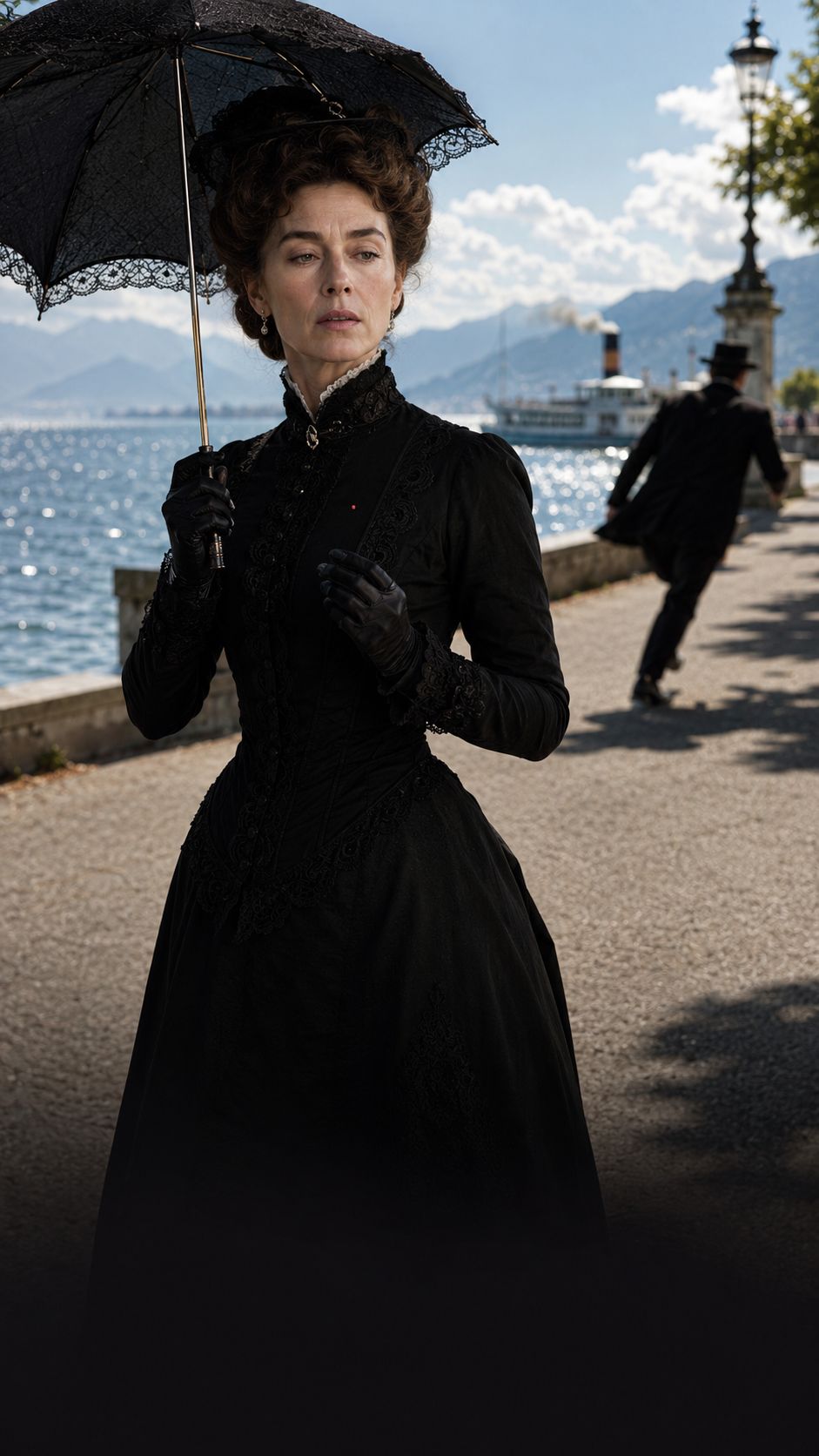
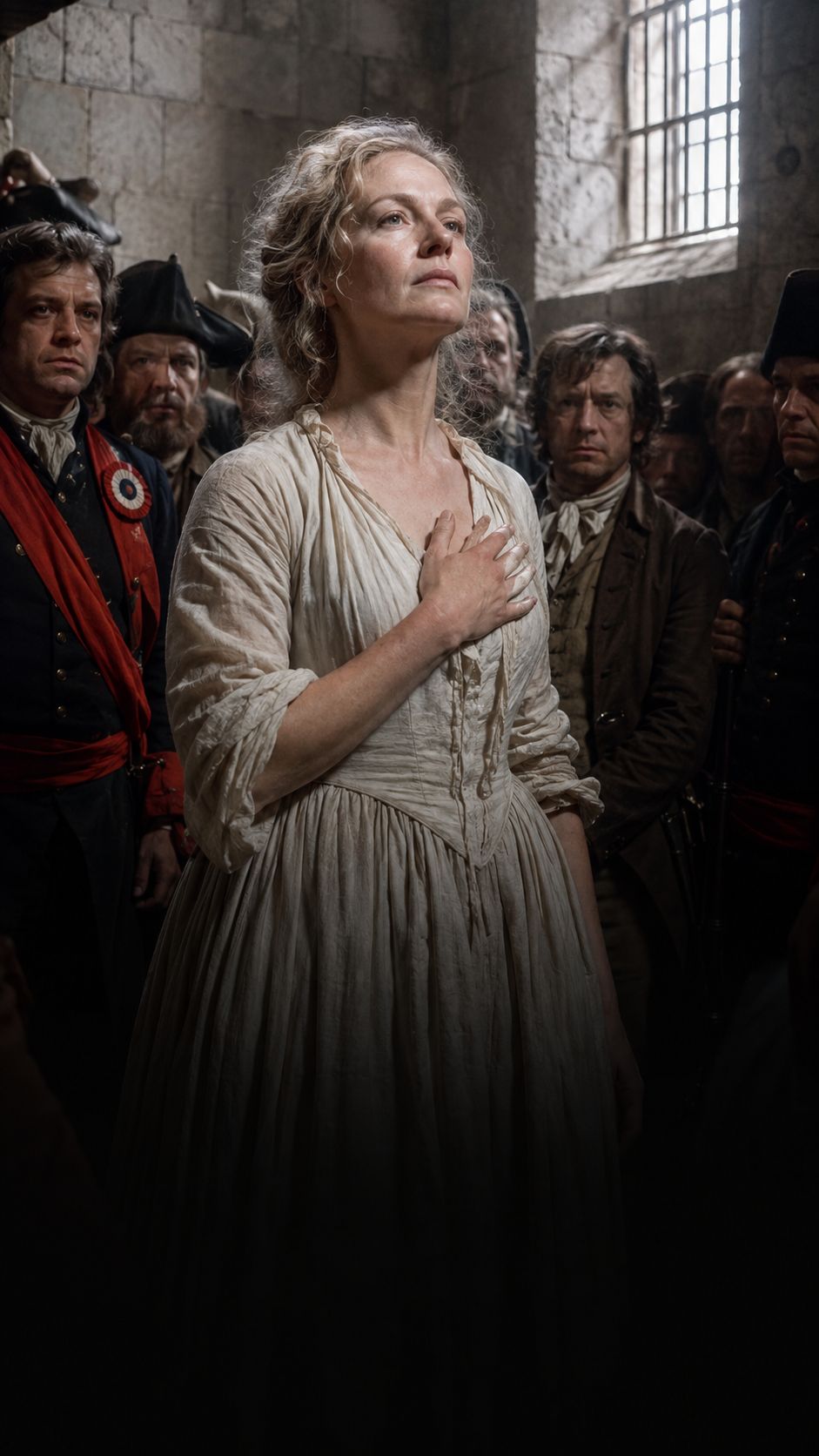
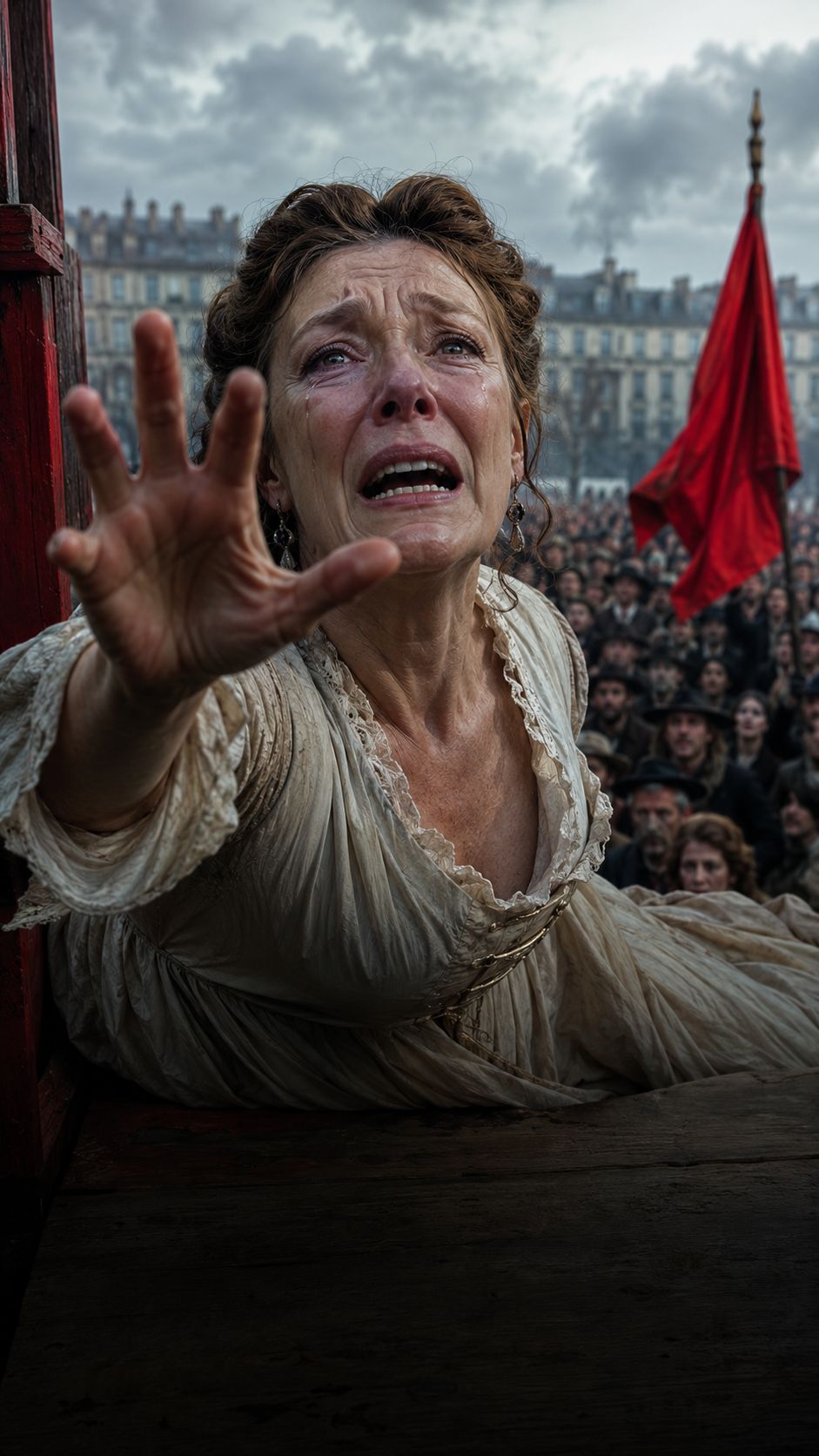
Brunhilda was a Visigothic princess who married into the Frankish royal house in 567 and then outlived two husbands, a sister’s murderer and her rival queen. For decades she ran Austrasia, the eastern Frankish kingdom, as wife, mother and regent for her son and grandsons. She was also the subject of one of the worst deaths in the early medieval record, and almost everything known about it was written by people who wanted her to deserve it.
The Horror
The feud begins with her sister. Brunhilda married Sigebert I of Austrasia in 567. His brother Chilperic I of Neustria then married her sister, Galswintha. Within about a year Galswintha was dead. Gregory of Tours says she was found dead on the bed, and the usual modern reading is that she was strangled, probably at the urging of Chilperic’s mistress Fredegund. Three days later, according to one account, Chilperic married Fredegund. Brunhilda’s hatred of the pair is the thread that runs through the next forty-odd years, a feud the historian Patrick Geary said “wrecked the Merovingian family.”
Sigebert was assassinated in 575, and Fredegund is said to have ordered it. Chilperic was himself murdered in 584 in circumstances that remain mysterious. Fredegund ruled Neustria as regent for her son Chlothar II and died on the 8th of December 597, apparently of natural causes. That left Brunhilda, and Fredegund’s son.
By 613 Brunhilda was well over sixty. Her exact birth year is uncertain (about 543 is common, other estimates range wider), so any figure for her age is approximate. She was trying to keep the throne for her great-grandson Sigebert II. The nobles of Austrasia and Burgundy would not follow her. Her mayor of the palace, Warnachar, went over to Chlothar, and her forces were beaten in the campaign that ended with Sigebert II’s death. She and the boy king had fled towards Orbe, in what is now Switzerland, when they were captured. Sigebert II was killed.
What happened to Brunhilda is told in three versions that do not quite agree. All of them are late and hostile.
- Fredegar (a Burgundian chronicle of the 7th century, written by an anonymous author, whose Book IV drew on witnesses to events between 603 and 613) is the likely source for the Renève version, though the sources do not say which text carries which detail. She was tormented for three days, tied by her hair, one arm and one leg to the tail of an untamed horse, and dragged to her death. Her broken body was burned.
- The Liber Historiae Francorum, an eighth-century work (c. 727), adds the camel: she was paraded on one before the army, then tied to wild horses and torn apart.
- Modern retellings often give “four horses” or “each limb to a different horse”. That detail cannot be traced to the earliest account, and the hair, arm and leg detail above points the other way.
Chlothar’s charge against her, as reported, was that she had caused the deaths of ten Frankish kings. The figure is a rhetorical accusation rather than a count, and one modern summary calls the charge propaganda. The French historian Bruno Dumézil argues the manner of her death helped to preserve her memory and feed the legend. The point of the horse, in that reading, was theatre: an untamed animal that would not be stopped was meant to show that God had withdrawn his support from the queen, which in turn justified Chlothar’s rule.
The place is the traditional Renève, on the Vingeanne in Burgundy, about 30 km north-east of Dijon. The tradition is old, but the exact spot is not known, and the coordinates on this page are the village itself.
What is certain, and what is not. It is certain that Brunhilda was ruling in the 590s and 600s, that the Austrasian and Burgundian elite abandoned her in 613, and that Chlothar II emerged as king of all the Franks while she did not survive. That she was executed in 613 is accepted. The method, the three days, the camel and the burning all rest on Fredegar and the Liber, and the Liber is not independent of Fredegar. Jonas of Bobbio, whose Life of Saint Columbanus is one of the hostile sources, says only that Chlothar killed her after capturing her. French scholarship rates Fredegar, Jonas, the Life of Desiderius of Vienne and the Liber as clearly hostile. Gregory of Tours, who wrote in her lifetime and was close to the Austrasian court, gives a more favourable early portrait of her, but he is just as biased against Fredegund. The queens’ own words, and the Frankish side of the story, have not survived.
The Modern Relic
Brunhilda founded the abbey of Saint-Martin at Autun, and tradition says she was buried there. The foundation date is itself disputed: sources give anything from about 592 to 602. The abbey and her tomb were destroyed in 1793, in the Revolution. On the 25th of August 1632 the tomb had been opened, and it was found to hold a lead box of ashes, powder and bones, along with a spur rowel and bits of charcoal. The box was put back. Two pieces of her sarcophagus cover are now in the Musée Rolin in Autun. French Wikipedia treats the burial as tradition rather than proven fact.
Her name outlived her more widely than her bones did. Across northern France and Belgium, old roads are still called chaussées Brunehaut, “Brunehaut’s causeways”. Most lie in what had been Neustria, the kingdom she never ruled, so they cannot be her work. They are a folk attribution, as is the story told at Abbeville that a wild mare dragged her down the Roman road there. This is legend rather than record, and it contradicts Renève.
Frankish chroniclers called her “a second Jezebel”, and the label stayed. Whether she was a ruthless poisoner of kings, or a queen who kept a state together and was destroyed by the son of the woman she had fought, is something the surviving texts cannot settle.