Thomas Edward Ketchum was born on October 31, 1863 in San Saba County, Texas, and by the 1890s he was working the railroads of New Mexico Territory as a robber, usually with his brother Sam. He is remembered as “Black Jack”, although at least one historian of the hanging suspects the nickname was borrowed from another outlaw. The charge that killed him was not murder. It was an attempt to rob a train on his own.
The Horror
On August 16, 1899, Ketchum tried to hold up a train alone, at the same spot near Folsom where the gang had struck before. The conductor, Frank Harrington, recognised him and fired a shotgun into his right arm. A posse found him by the track the next day. The arm was amputated, at Trinidad, Colorado according to most accounts, though one account has the infection setting in only during his imprisonment at Santa Fe. How exactly he was taken is disputed; local tellings credit different men with the arrest.
He was tried at Clayton and condemned under a territorial law making assault on a train a capital crime. That law was later found unconstitutional. He was the only man ever hanged in Union County, and the town had no experience of how to do it. Arizona had also asked for his extradition on a murder charge. Of the killings the gang was suspected of, Ketchum and his brother were never tried for any.
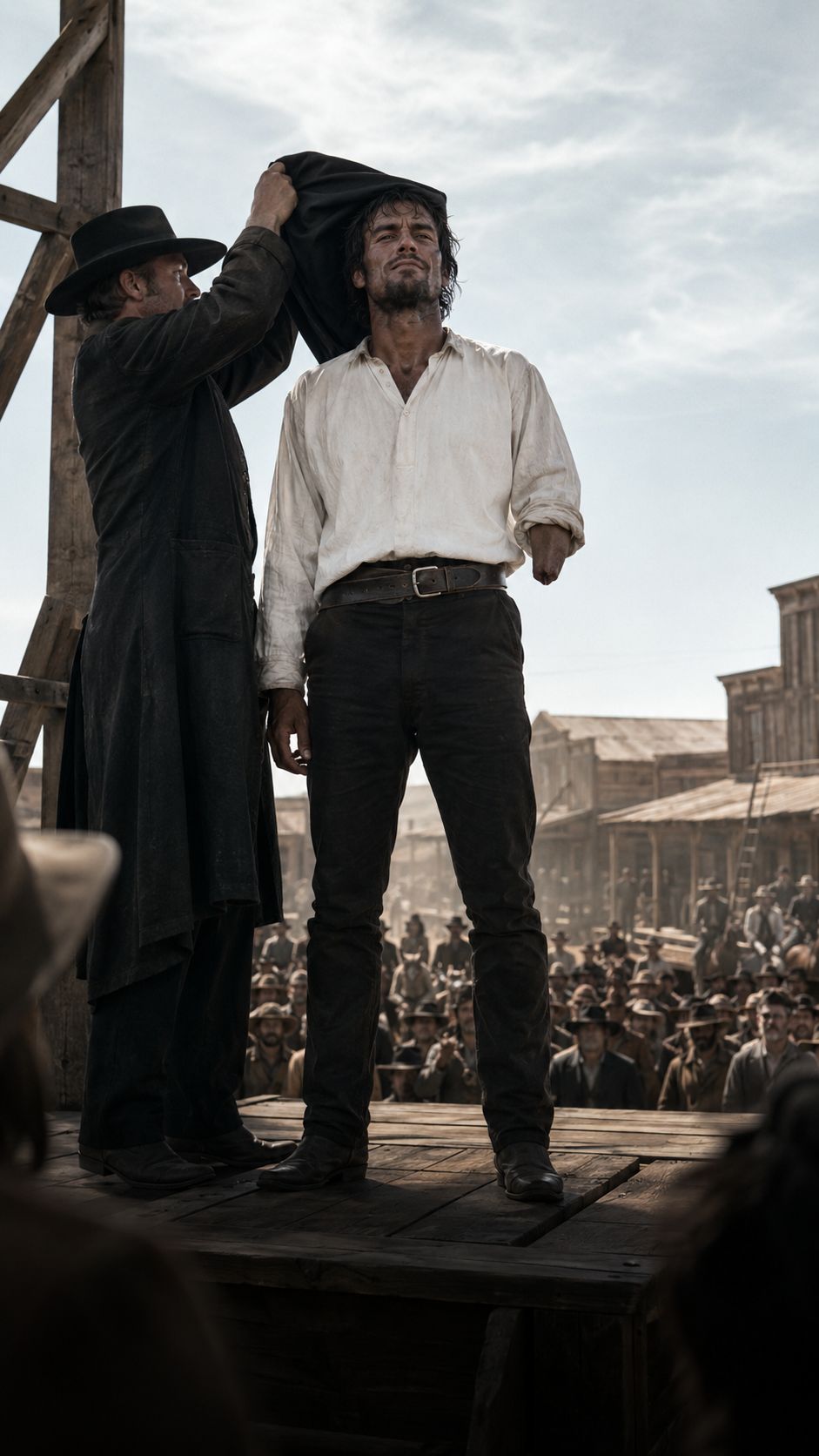
On April 26, 1901, a stockade was built at the courthouse. The Territory’s governor sent Lewis C. Fort to oversee arrangements, and Sheriff Salome Garcia ran the hanging. Ketchum weighed about 193 pounds. The surviving accounts agree on the outline and disagree on the arithmetic. One account says a drop of five feet nine inches was first settled on and then lengthened to seven feet, and that even the shorter figure would have been too much for a man of his weight. Another says five feet was considered sufficient. The rope is described as a thin half-inch cord, which was tested the day before with a heavy sandbag left hanging overnight. Whether that stretched or stiffened it is conjecture. Garcia cut the control rope with a hatchet, at about 1:17 p.m. by one account and 1:13 p.m. by another; the execution had been scheduled for the morning.
The fall tore Ketchum’s head from his body. A newspaper account quoted at Executed Today says the rope severed it “as cleanly as if a knife had cut it”, and the head dropped into the pit. Dr. Slack is recorded pronouncing him dead a little over five minutes after the drop. Accounts say the head was held to the body with a hood pinned to the shirt, and that it was sewn back on before burial. Garcia’s own report, quoted by Wikipedia, records that the head had been severed by the fall; another writer notes that the sheriff also claimed there had been “no bungling whatever”.
The causes offered are the long drop, the rope, his weight and the lost arm that unbalanced him. None has been settled, and the story that the rope was soaped to make it run is second-hand, from an unnamed Clayton newspaperman.
Legend, not record. No two sources agree on his last words. One version is “Hurry up boys, get this over with”; another is “Good-bye. Please dig my grave very deep. All right; hurry up.” The best known, “I’ll be in hell before you start breakfast, boys! Let her rip!”, is called alleged and possibly fictional by the page that prints it. Tales that the body took steps after the fall, or that the crowd paid for tickets, come from retellings rather than from any contemporary document.
The Modern Relic
Photographs of the scene were taken from beside the stockade and sold as a postcard, so the hanging survives in images as well as in words. The stockade is gone, but a plaque placed in 2001 marks the site on the north wall of the old sheriff’s office at the Union County Courthouse in Clayton.
He was buried at Clayton on the day of the hanging, and his grave is now in Clayton Cemetery, east of the town, about halfway down the main track under the trees. It was first at Clayton’s Boot Hill, and accounts say it was moved later.
Legend, not record. A local tradition says he asked to be buried face down so that the conductor who shot him could kiss his backside, and that when the grave was moved the body was turned over. Another says the grave is haunted and that walking round it brings bad luck. The site where those tellings are collected presents all of them as legend, and no contemporary record supports them.