Laurence Shirley, 4th Earl Ferrers, was a peer of the realm with a fortune, a country seat at Staunton Harold in Leicestershire, and a reputation for violent rages. He inherited the earldom at 25. His wife, Mary, won a legal separation from him in 1758 on grounds of cruelty, a rare thing in that age, and complained of his drinking, his womanising and his illegitimate children. Two years later he killed a servant who had done nothing worse than his job, and became the last peer of the realm to be hanged as a common felon.
The Horror
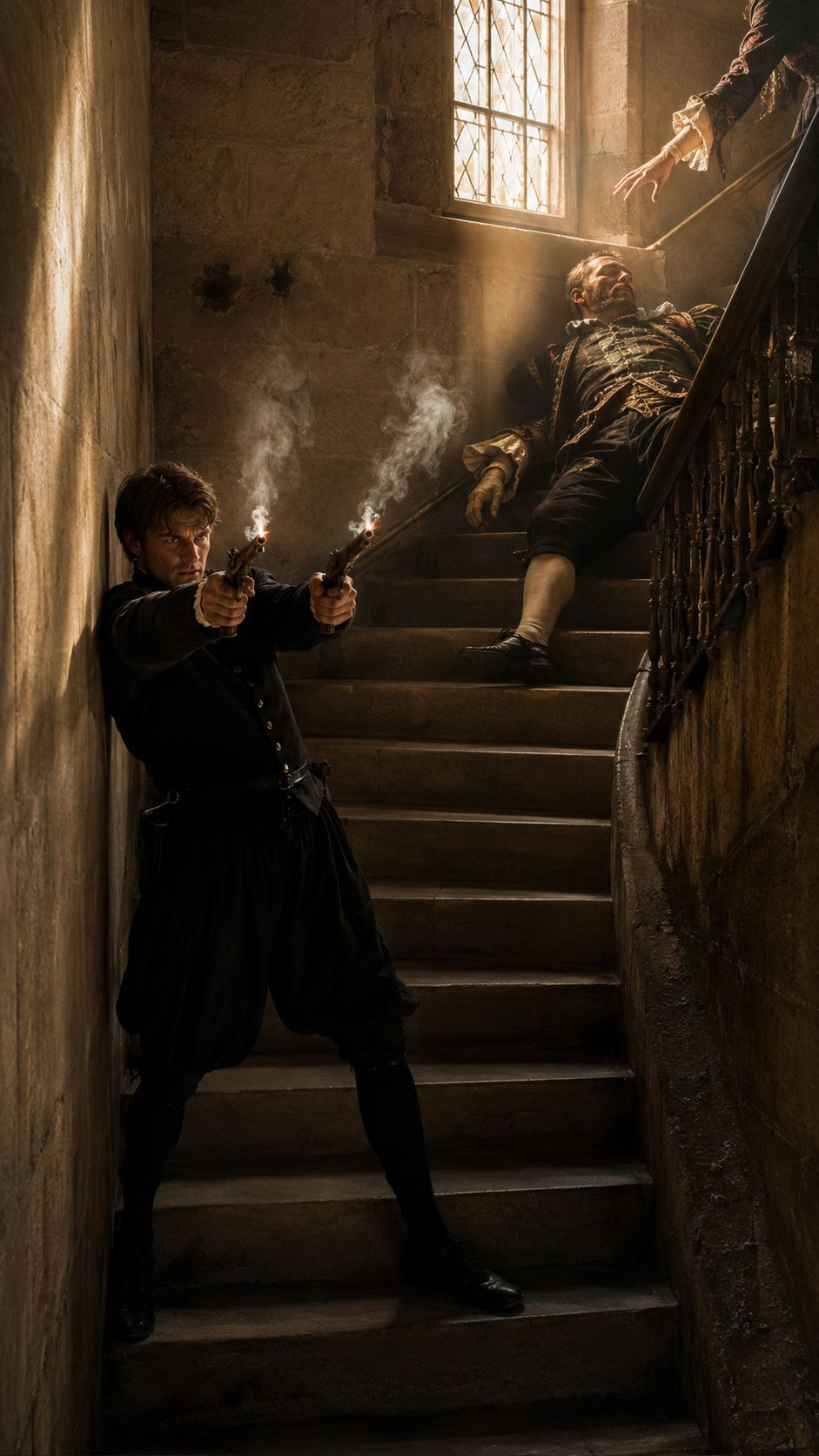
The servant was John Johnson, the family’s steward and receiver of rents for the trustees who managed the estate in the wake of the separation. On January 18, 1760, Johnson came to Staunton Harold by appointment. Ferrers had cleared the house of his mistress, her children and the male servants. He took Johnson into his study, argued with him, and shot him in the chest. Johnson did not die at once. He was carried to a bedroom, where the drunken earl abused him, and was then taken home by a physician. He died the next morning.
Ferrers was taken to Leicester gaol and then to the Tower of London. As a peer he could be tried only by his peers, and the trial opened in Westminster Hall on April 16, 1760, with Lord Henley presiding as Lord High Steward. Ferrers conducted his own defence and pleaded insanity. Witnesses gave conflicting accounts of his conduct, and the Lords were not persuaded. Each peer, asked in turn, declared him guilty of felony and murder upon his honour. He was sentenced on April 18 under the Murder Act 1751, which required that a murderer be hanged and then dissected. He later said he had made the insanity plea only to oblige his family and was ashamed of it.
He asked for the axe, the privileged death of a traitor. George II refused. Murder was a felony, and a murderer would hang.
On Monday, May 5, 1760, Ferrers left the Tower at about nine in the morning in his own landau, drawn by six horses, among sheriffs’ carriages, a mourning coach and a hearse, through crowds so dense that the journey to Tyburn took the best part of three hours. He wore the light suit, embroidered with silver, that he had been married in. By one account, he remarked that the day was at least as good an occasion as the first. On the road he asked for wine and water and was refused.
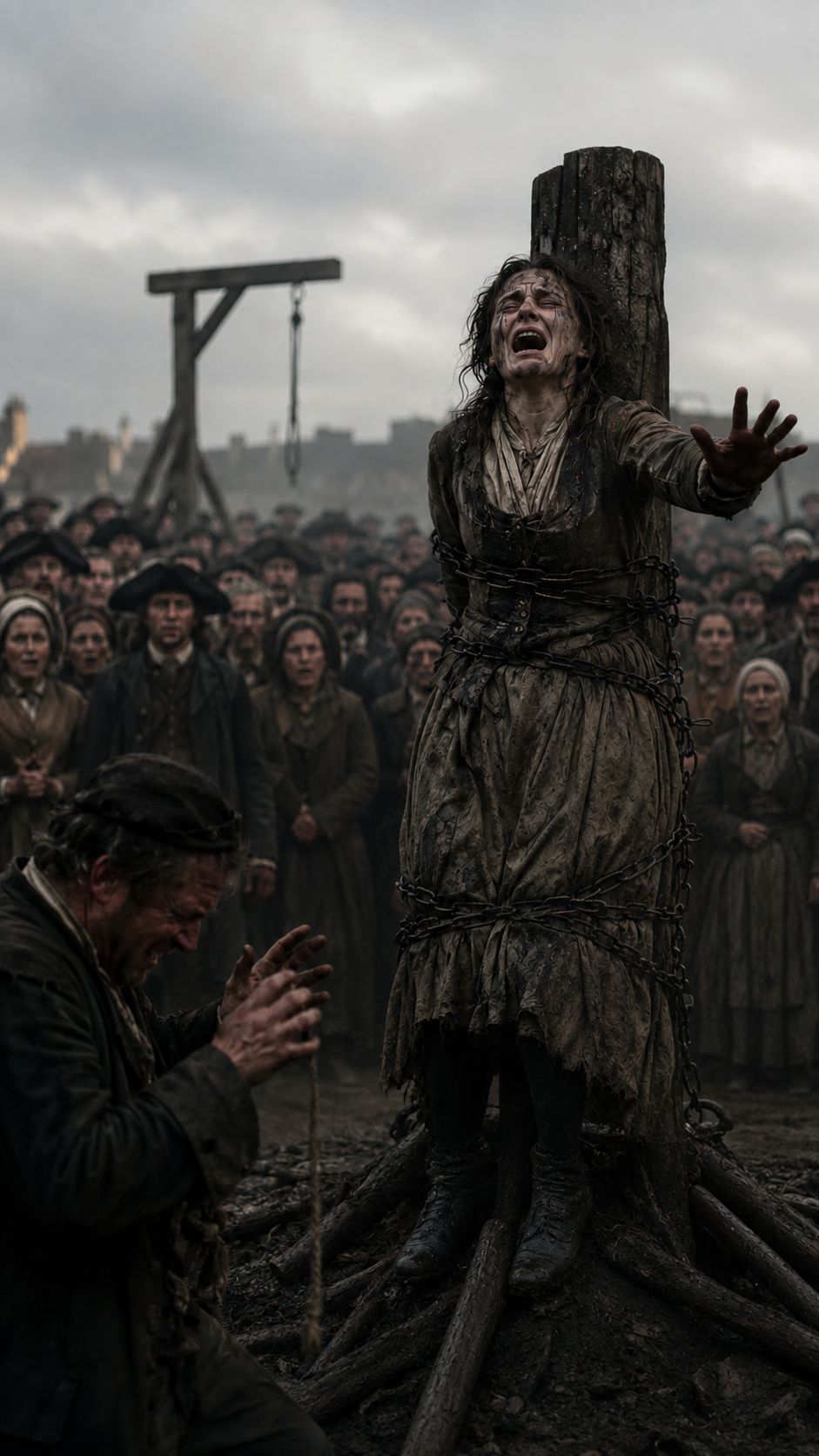
What followed is where the story and the record part company, and the sources are not in full agreement. The sound facts are these. The scaffold had been hung with black at his family’s expense. He was the first man hanged at Tyburn on the “new drop”, a platform that fell away beneath the condemned in place of the cart or ladder the older method used, and it was reported to have been new and not quite ready. He handed his watch to Sheriff Vaillant and gave money to the chaplain and the executioner, Thomas Turlis. One account says five guineas meant for Turlis went by mistake to his assistant, and that this caused a brief scuffle. He prayed, and he is reported to have asked the hangman whether he was “right”.
Then the botch. According to the popular accounts, the platform did not drop cleanly, and his toes touched it, so that he “suffered a little” and the executioners pulled on his legs. One source puts the time to death at about four minutes and names Horace Walpole as the only source for the figure. These are reported details. They come from secondary accounts that do not cite their original description, and the exact duration is unverified. A man who sets out to be hanged with dignity and has to be helped to die is the botched execution in its plainest form. After about an hour, as custom required, the body was cut down.
His body was taken to Surgeons’ Hall in the Old Bailey. There the surgeons made only a token incision, as the sentence demanded, and it lay in an open coffin for the public to view until May 8. It was then released to his family and buried at St Pancras.
The Silken Rope
The tale that gives the story its fame is that, as a courtesy to his rank, Ferrers was hanged with a rope of silk. It is almost certainly a legend. The Dictionary of National Biography states plainly that there is “no foundation” for it. The History of Parliament notes that contemporary accounts of the execution do not mention it. One modern source suggests the confusion arose from a black silk sash binding his arms, though that is unconfirmed. The DNB does record that the silken cord he is supposed to have wanted was said to belong to a collection of historic ropes. Whatever he asked for, there is no sound evidence that he got it.
The Modern Relic
Tyburn Tree stood about 200 metres west of where Marble Arch stands today, at the junction of the Edgware Road, Bayswater Road and Oxford Street. The gallows is gone. Three young oak trees, planted in 2014 on the traffic island in the middle of the Edgware Road at Bayswater Road, and a roundel reading “The site of Tyburn Tree” now mark the spot. Ferrers’s execution came late in the history of the gallows, whose last hanging was that of the highwayman John Austin on November 3, 1783.
His body did not rest. It was dug up on June 3, 1782 and reburied in the family vault at Staunton Harold, where the church still stands. An engraving of the earl in his coffin at Surgeons’ Hall was printed with his Memoirs in 1760, and the black cloth from the scaffold is said to have been torn up for souvenirs, along with the quarrel over the rope. Both stories are told by a popular blog, and neither is verified.