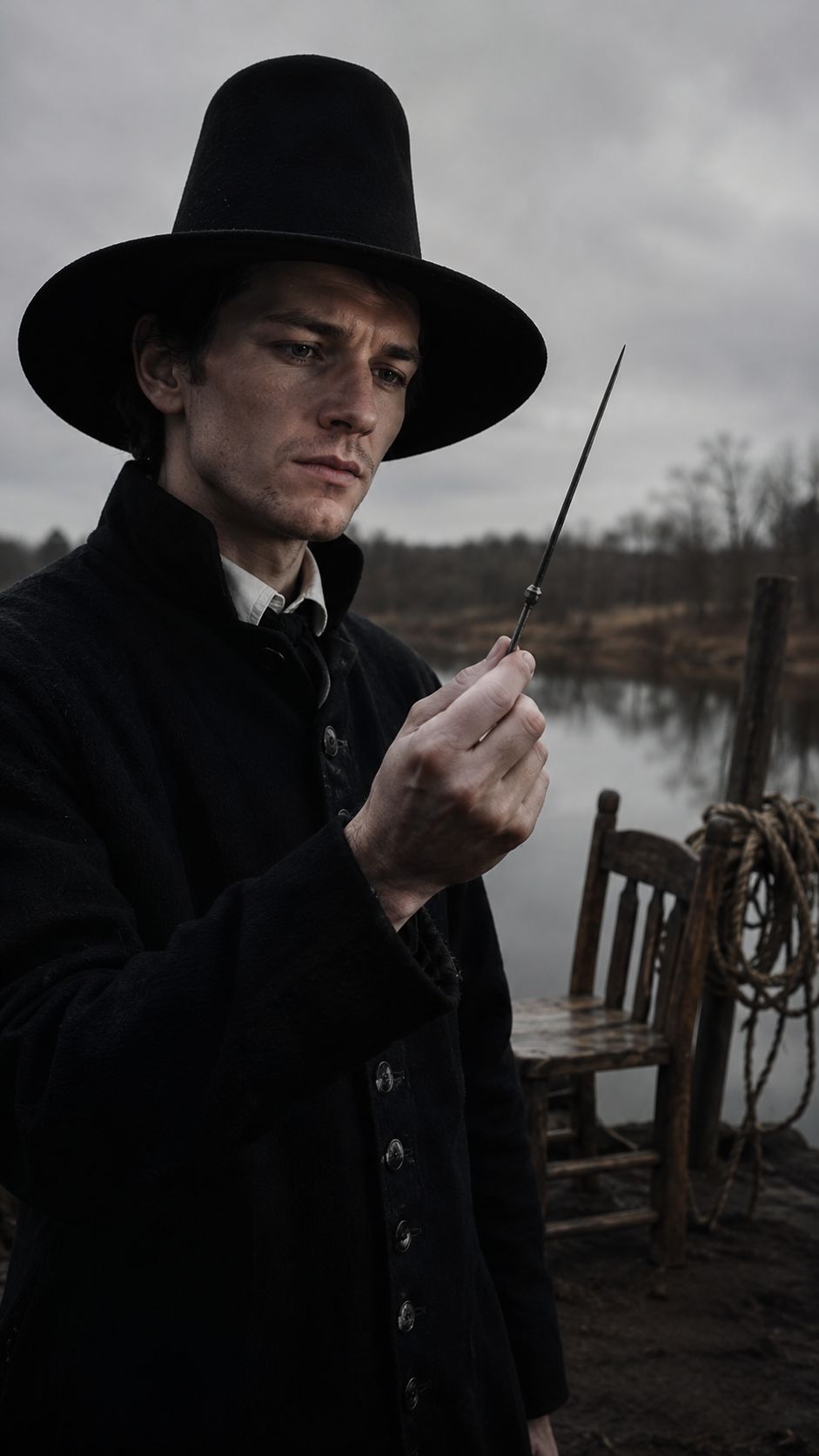
By the 990s England had been raided by Vikings for two centuries. In August 991 a Viking force came up the Blackwater estuary in Essex, and Byrhtnoth, ealdorman of Essex, led the local levy and his household warriors to meet it. What happened next is known mainly from an Old English poem, and parts of it are open to dispute.
The Horror
According to the poem, the Vikings offered to leave in return for gold and armour. Byrhtnoth answered that they would be paid in spear tips and sword blades. The two sides were separated by a tidal channel with a causeway, most likely the one to Northey Island, so the fighting could only start when the tide allowed it.
The poem’s central turn is that Byrhtnoth let the Viking army cross the causeway and form up on the English shore. The Old English word the poet uses for this decision, ofermod, is debated. It may mean pride or an excess of courage, and Tolkien read the poem as an elegy that blames Byrhtnoth for it. The Vikings crossed, and Byrhtnoth was killed. Godric fled on Byrhtnoth’s horse, and many of the English followed, believing the rider was their lord. The English lost.
The date is uncertain. Ely’s calendar gives 10 August and Winchester and Ramsey give 11 August. The identity of the Viking leader, who may have been Olaf Tryggvason, and the size of the Viking army are uncertain too. The battle site is thought to be near Northey Island, though Osea Island and Heybridge have been proposed.
Byrhtnoth’s body was found without its head. Monks from Ely took it away for burial there. When his remains were examined in 1769, the head was still missing, and the bones suggested a height of about 6 ft 9 in. They were reburied in 1781.
After the battle, Archbishop Sigeric and others advised paying the Vikings. The first tribute was 10,000 pounds.
The Modern Relic
The poem survives as a 325-line fragment with its opening and ending lost. It was transcribed in 1724, and the manuscript itself was destroyed in the Cotton library fire of 1731, so every later reading rests on the copy.
The causeway on Northey Island, a National Trust tidal island, is covered for up to three hours either side of high tide. It was about 120 yards long in 991 and is now about 240. In Maldon, a statue of Byrhtnoth by John Doubleday, placed in October 2006 at the end of the Promenade Walk, faces the causeway.