Latest stories

The Eleven-Year-Old Sentenced to Hang for a Frock

In January 1789 a London girl of about eleven was condemned at the Old Bailey for robbing a child of her clothes. A royal reprieve sent her to Australia, where she became a founding mother.

Evidence: moderate · Sourced: two or more sources, at least one beyond Wikipedia.

Mary Wade was a poor London girl who, in January 1789, was sentenced to hang for taking the clothes of a younger child. She did not hang. She was shipped to the other side of the world, and by the time she died in 1859 she had more than three hundred living descendants. They now number in the tens of thousands.

The Horror

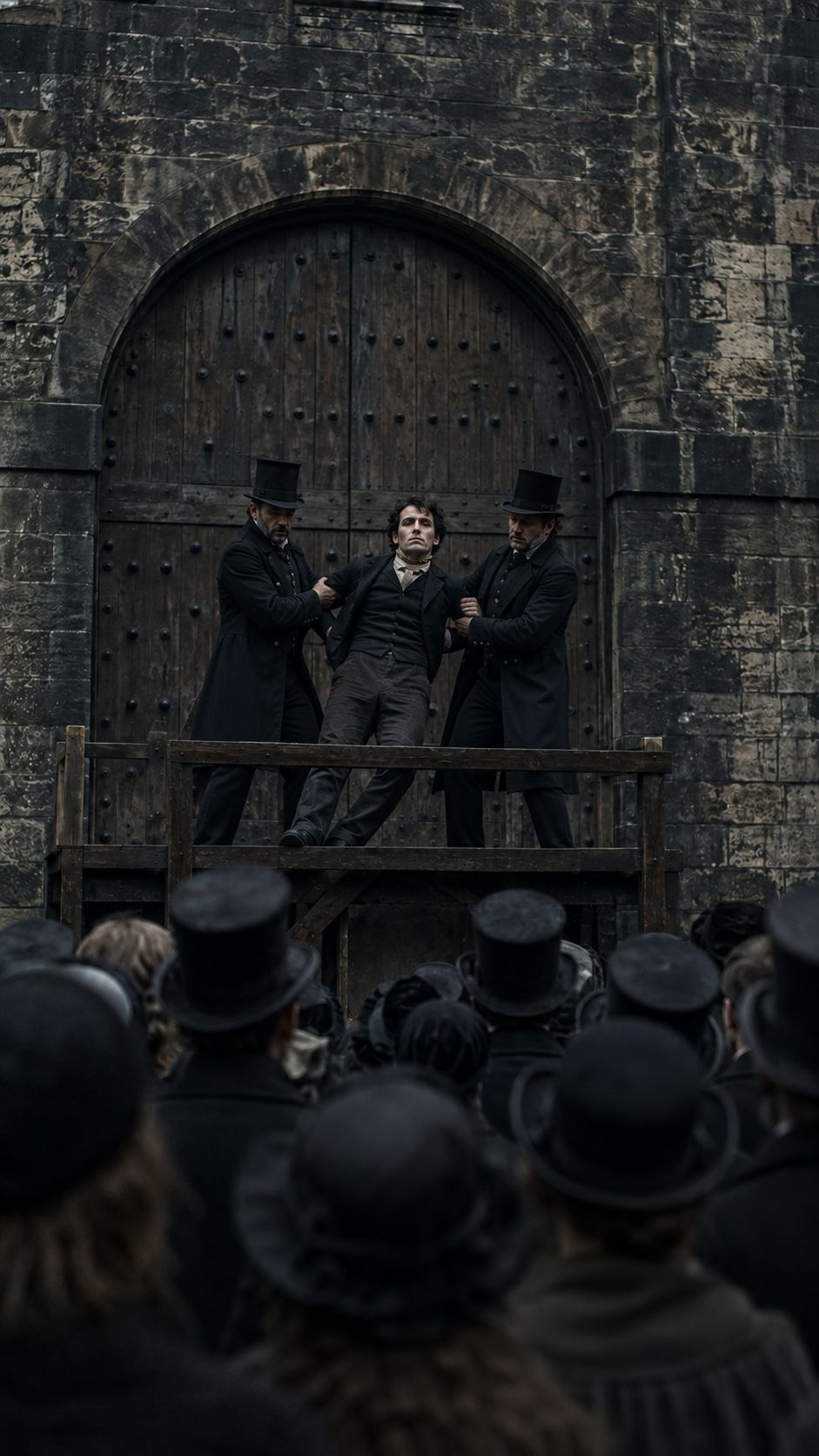
The facts of the crime come from the Old Bailey trial of January 14, 1789. Mary and a friend were accused of robbing a child of a cotton frock, a linen tippet and a linen cap. The victim is described in one account as an eight-year-old girl. Under the law of the time, robbery with menace was a capital offence. The jury found her guilty and the sentence was death.

Her age is uncertain. The usual account gives it as about eleven, which fits a birth year of 1777. Later research points to a birth on 17 December 1775 in Westminster, which would have made her 13, and at least one account gives that age at trial.

She was held in Newgate for 93 days awaiting execution. What saved her was not the court but the King. George III had been ill during the winter of 1788 to 1789, and on March 16, 1789, the death sentences of the condemned women were respited to mark his recovery. Mary’s sentence was commuted to transportation.

She sailed on the Lady Juliana, a convict ship carrying women and children, as its youngest convict. It reached Sydney on June 6, 1790. One regional account calls the ship a “floating brothel”; that label is reported, not verified. In August 1790 Mary was sent on to Norfolk Island on the Surprize. She was still a child and had two children of her own there, by Harrigan, a fellow convict.

Back on the mainland, family legend places her in a tent on the banks of the Tank Stream in Sydney, which is unconfirmed. From 1809 she lived with Jonathan Brooker, whom she married in 1817. They took land in the Illawarra, including 30 acres at Tarrawanna. Family tradition credits her with 21 children, a figure researchers question. She died at Wollongong on December 17, 1859, at about 84.

The Modern Relic

Her descendants include a former Prime Minister of Australia, Kevin Rudd, and she is described as one of the founding mothers of European settlement in Australia. In 2017 the New South Wales Government named a women’s remand centre after her.

In Wollongong, her funeral was the first held at St Paul’s Church. She was buried in the Church of England cemetery, which became Pioneers Rest Park around 1940. The headstones there were laid flat and covered by a rose garden, and the exact location of her grave is not confirmed. A plaque at the park entrance carries the name Mary Brooker.

Still there todayIn Wollongong, a brass plaque bearing the name Mary Brooker at the entrance to Pioneers Rest Park, the old Church of England burial ground where she is believed to be buried, though the exact plot is not confirmed. See it on the Dark Atlas →
Sources
  • Wikipedia, 'Mary Wade' — convicted of theft in London in 1789, sentenced to death and transported, the youngest convict on the Lady Juliana, sent on to Norfolk Island, children with Teague Harrigan, living from 1809 with Jonathan Brooker whom she married in 1817, death in 1859 aged 84 with over 300 living descendants, the doubt over the figure of 21 children, descendants now in the tens of thousands including Kevin Rudd, and a NSW women's remand centre named for her in 2017. The page says her birth date and parentage are disputed: 1777 in Southwark in earlier research, 17 December 1775 in Westminster in later research
  • Dictionary of Sydney, 'Mary Wade' — convicted of assaulting and stealing from an eight-year-old girl, the Lady Juliana reaching Sydney on 6 June 1790, her departure for Norfolk Island on the Surprize in August 1790, two children there, the family legend of a tent on the Tank Stream, land in the Illawarra, and her death at Wollongong on 17 December 1859. It gives 1777 as her birth year, which sits oddly with its own statement that she was 11 in 1790
  • Executed Today, '1789: Not Mary Wade, 11-year-old thief' — the Old Bailey trial on Wednesday January 14, 1789, the robbery of a cotton frock, a linen tippet and a linen cap, the sentence of death, 93 days in Newgate, and the respite of March 16, 1789 given to condemned women to mark George III's recovery. The page also claims an earlier similar offence at age eight; that is not repeated here. A secondary source for the trial details
  • Region Illawarra, 'Sentenced to hang at 13, she became an Illawarra legend' (October 28, 2025) — land at Tarrawanna, her death on 17 December 1859, the first funeral at St Paul's, burial in the Church of England cemetery that became Pioneers Rest Park around 1940, a descendant's belief (not confirmed) that she lies in plot three, the plaque at the park entrance, descendants in the tens of thousands, and the dispute over the number of children and over the Lady Juliana's fleet. It gives her age at trial as 13, one of several figures in circulation

Nearby on the Dark Atlas

  • The Monks Starved in the Dark

    Refusing to bow to the King, ten monks were chained upright in darkness and left to waste away.

  • The Thief Who Escaped His Own Execution Cell

    Chained to the floor of a condemned cell with hours to live, he picked his way out with a crooked nail.

  • The Woman Burned So Men Could Be Hanged

    English law spared women the axe for treason — and sentenced them to be burned alive at the stake instead.

  • The Last Man Hanged In Public In England

    A crowd of two thousand gathered outside a London prison to watch him hang — the last time that would ever legally happen in England.

All stories near London →

← Back to the archive