Latest stories

The English Achilles Killed by French Guns at Castillon

John Talbot, Earl of Shrewsbury, charged a fortified French artillery park in July 1453, was pinned under his dead horse and killed with an axe. England's war for France ended with him.

War & battleOn the mapRecord & legend marked

Evidence: strong · Well sourced: three or more sources, including an archive, museum, university or reference work.

For a generation the French feared John Talbot. He was the Earl of Shrewsbury, the most aggressive English commander of the late Hundred Years’ War, known to his enemies as “the English Achilles” and, in the field, as “le roi Talbot”. In 1453 he was in his mid-sixties and fighting for a cause that was already lost.

The Horror

By 1453 the war had turned. The French under Charles VII were winning, and in July 1453 a French force held a position at Castillon, east of Bordeaux, which Talbot marched to attack.

The French camp had been laid out by Jean Bureau, the king’s ordnance officer. It was an artillery park: a trench and an earth wall reinforced with tree trunks, its line shaped so that the guns could fire along the length of an attacking force. It held up to about 300 guns.

Talbot attacked it on 17 July 1453. He had been led to think the French were retreating. The dust he saw was, according to the modern account, camp followers leaving, not the army. He pressed on to catch an enemy that was not running away.

He was also, by his own earlier promise, an unusual attacker. After being taken hostage at Rouen in 1449, he had promised never again to wear armour against the French king. At Castillon he was the only Englishman still mounted and he wore none.

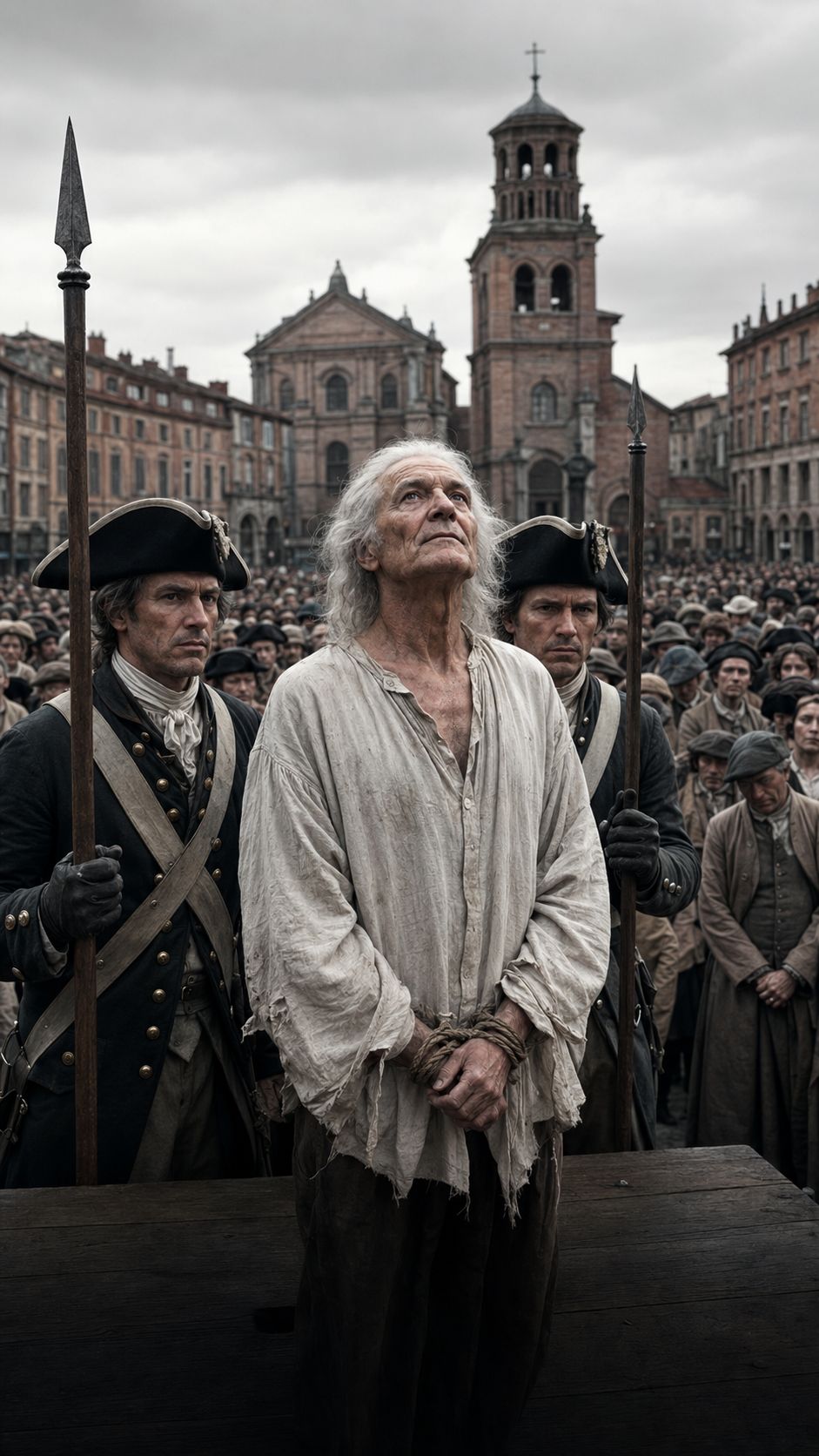
The guns broke the attack. A report from the time, treated as report rather than proven fact, says a cannon shot killed his horse, which fell and pinned him, and that a French soldier then killed him with an axe. The circumstances of his death are debated. His son, John Talbot, Viscount Lisle, was killed in the same battle. Desmond Seward’s account says a single shot could kill six men at a time, a figure that is reported rather than verified.

The English garrison of Castillon surrendered on 19 July. Bordeaux fell to the French on 19 October. Of the English holdings on the French mainland, only Calais remained. It is often said that the news helped trigger the collapse of Henry VI’s mind in late 1453. That is speculation.

The Legend

The story of Talbot’s identification is well known. His body was said to be so disfigured that his own herald knew it only by a missing tooth. This comes from the chronicler Mathieu d’Escouchy, as relayed by the Dictionary of National Biography. The further details sometimes added, such as the herald’s forty years of service, kissing the corpse and weeping, are not confirmed by the sources consulted here.

The Modern Relic

Talbot’s remains were moved to St Alkmund’s Church in Whitchurch, Shropshire, towards the end of the fifteenth century. His chest tomb stands in the south wall of the Lady Chapel, with a praying effigy and dogs at its feet, the talbot hound being his family emblem. His embalmed heart is recorded as buried under the church porch. The effigy is set in a nineteenth-century tomb chest and arch.

On the French side, a monument was raised on the field by the victors. A chapel known as “la chapelle de Talbot” over a tumulus is recorded as standing there until the Revolution. Whether anything of it survives today is unconfirmed.
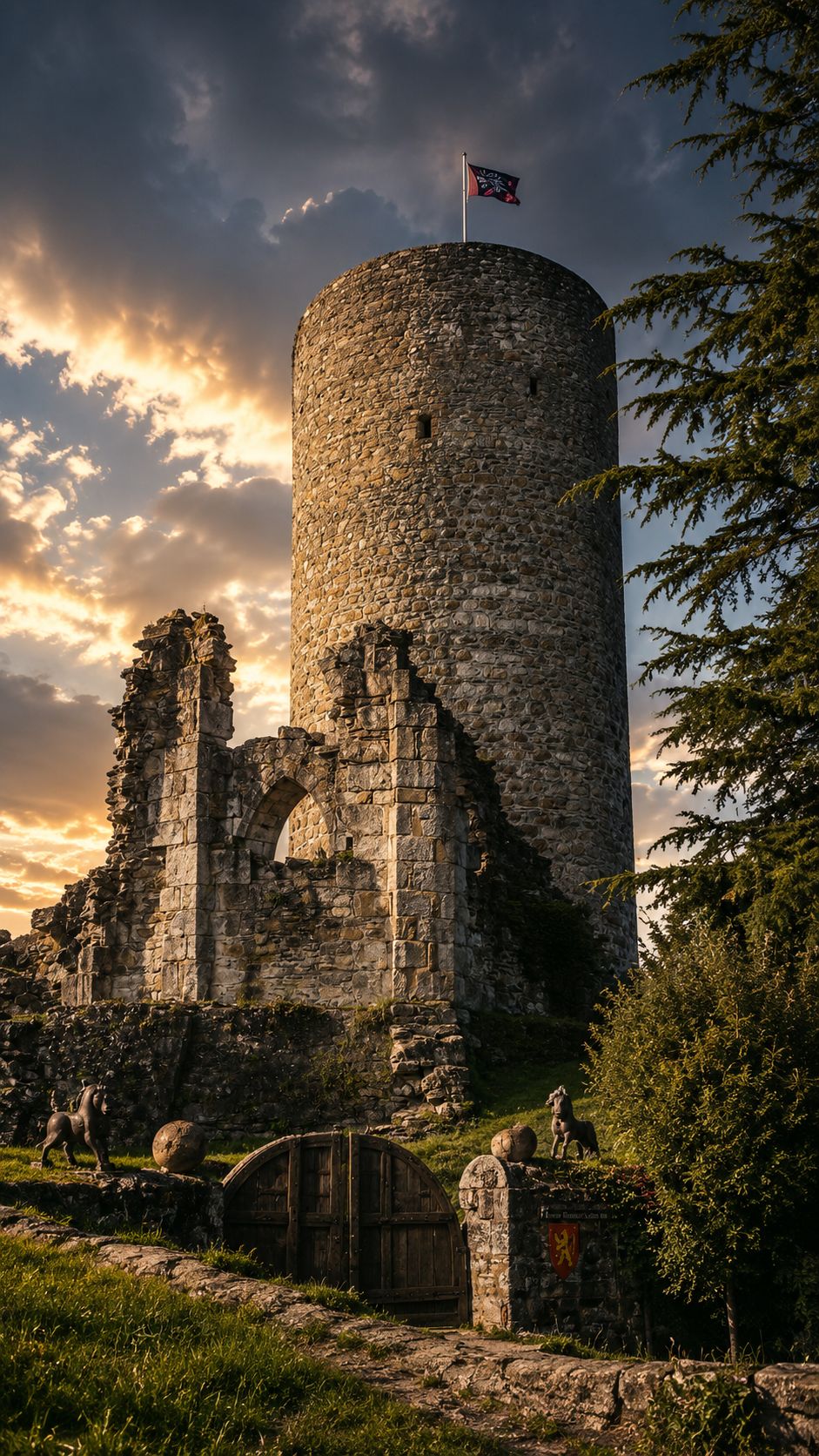
Still there todaySt Alkmund's Church, Whitchurch, Shropshire, a Grade I listed parish church. In the Lady Chapel a chest tomb in the south wall holds a fifteenth-century praying effigy with dogs at its feet, in a nineteenth-century tomb chest and arch. His embalmed heart is recorded as buried beneath the church porch. See it on the Dark Atlas →
Sources
  • Wikipedia, 'Battle of Castillon' — the date of 17 July 1453; the battle as a French victory and the usual end-point of the Hundred Years' War; Talbot's age judged to be about 66 though rumoured to be 75 or 80; Jean Bureau's artillery park with a trench and earth wall and up to about 300 guns; Desmond Seward's report of shots killing six men at a time; Talbot's horse killed by a cannon shot and falling on him and a French archer killing him with an axe, with the circumstances debated; Talbot the only Englishman mounted and unarmoured; his son John Talbot, Viscount Lisle, also killed; the dust cloud mistaken for a retreat and caused by camp followers leaving; the surrender of the English garrison on 19 July and the fall of Bordeaux on 19 October; Henry VI's loss of capacity in late 1453, with any link to the news only speculation; England left with Calais. The article names only Jean Bureau and does not mention a brother, a Rouen oath, a herald or a re-enactment
  • Wikipedia, 'John Talbot, 1st Earl of Shrewsbury' — death at Castillon through an ill-advised charge on field artillery after reports of a French retreat; the horse and battleaxe account presented as a report from the time; the promise made after being taken hostage at Rouen in 1449 never to wear armour against the French king again; the heart buried in the doorway of St Alkmund's, Whitchurch; the effigy there; his nicknames 'the English Achilles' and, in the field, 'le roi Talbot'; a monument raised on the field by the French. The herald and missing-tooth story is not in this article
  • Dictionary of National Biography, vol. 55, entry on Talbot (via a Wikisource page image) — the body so disfigured that his own herald recognised it next day only by the absence of a tooth, citing the chronicler Mathieu d'Escouchy; a chapel over a tumulus known as 'la chapelle de Talbot' that stood until the Revolution. A single nineteenth-century reference work, relaying a fifteenth-century chronicle
  • Wikipedia, 'St Alkmund's Church, Whitchurch' — the Grade I listed church; the chest tomb in the south wall of the Lady Chapel with a fifteenth-century praying effigy, the body moved there towards the end of the fifteenth century; the embalmed heart buried under the porch; the church rebuilt after the tower collapsed in 1711; the coordinates

Nearby on the Dark Atlas

  • The Princess Who Sailed Into the Black Death

    In the summer of 1348 Joan, daughter of Edward III, sailed for her wedding in Castile. She was dead of plague near Bordeaux on September 2, aged fourteen. Her father's grieving letter survives.

  • The Crossbow Bolt That Killed A Crusader King

    A rich king besieging a tiny castle over buried treasure took an arrow he never saw coming.

  • The Sack of Limoges: The Black Prince Who Was Carried to the Breach

    In September 1370 the sick Black Prince had himself carried in a litter to Limoges. Froissart says three thousand died. Modern historians say perhaps three hundred.

  • The Merchant Voltaire Fought To Clear

    A Protestant merchant was executed for his son's death in Catholic Toulouse, until Europe's most famous writer took up his cause.

All stories near Gironde →

← Back to the archive