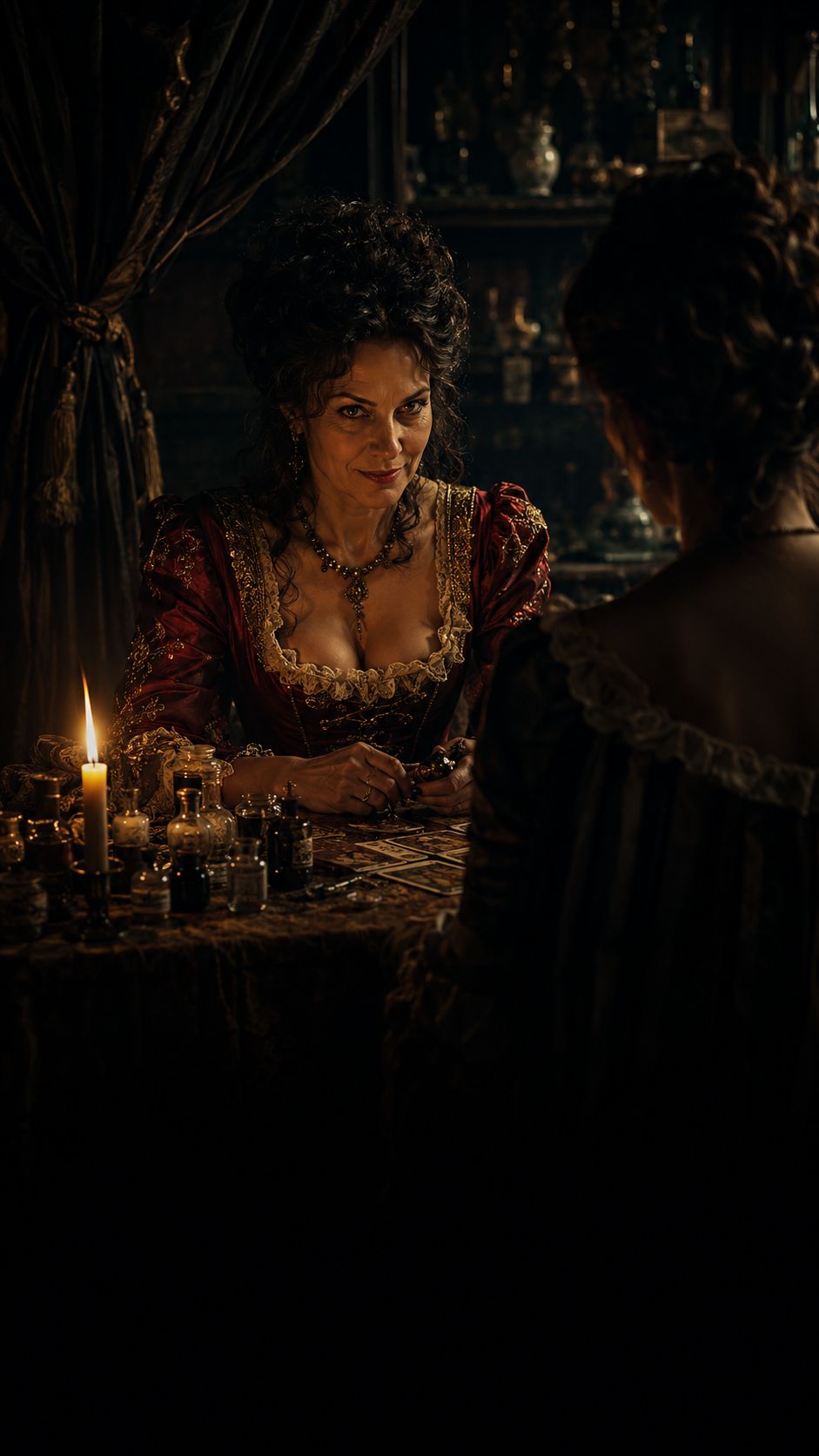
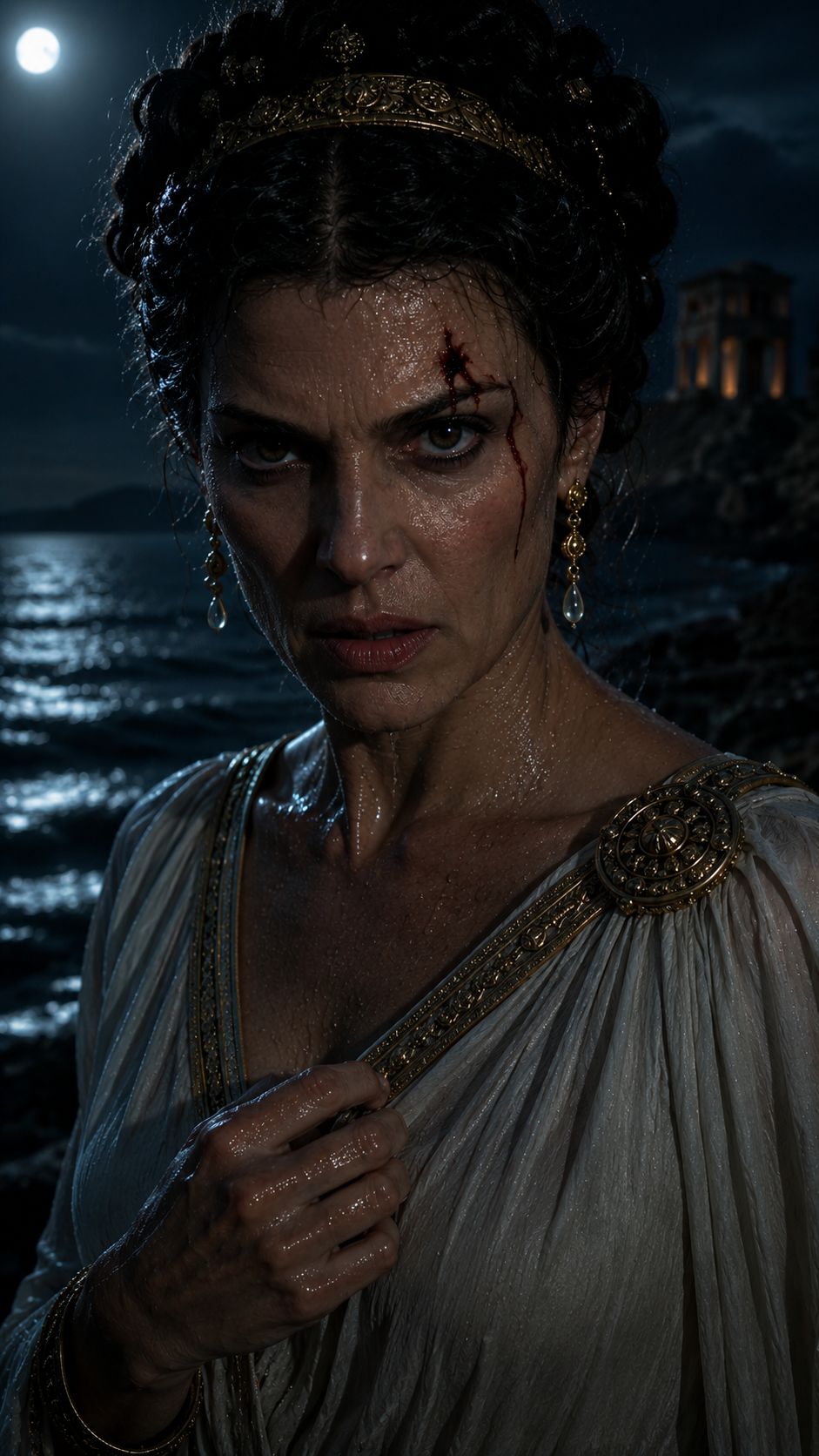
Amalasuntha was the daughter of Theodoric the Great, the Gothic king who ruled Italy from Ravenna. She was probably born there around 495. Her mother, Audofleda, was the sister of Clovis, king of the Franks. When Theodoric died in 526 the crown went to her son Athalaric, who was about ten, and she governed as regent. Almost nine years later she was dead on an island in a lake in central Italy, killed by men who wanted her out of the way and, the sources suggest, by men further off who wanted a reason for a war.
The Horror
Her regency was an uneasy one. The surviving writers of the period, Procopius and Cassiodorus among them, describe a ruler of unusual determination, and she wanted her son educated in the Roman manner. Gothic nobles regarded that as soft. By the account in the Quintus Curtius blog, Athalaric fell into sensuality and drink, and Wikipedia says he died in 534, of excessive drinking and probably diabetes.
Before that, she had struck first. Wikipedia says she banished three Gothic nobles she suspected of plotting against her and then had them put to death. Scholars have suggested that one of them was Tuluin, but that is a suggestion and not a settled identification. These killings matter, because the men’s relatives are the ones who, in Procopius’s History of the Wars, later go to the island.
With Athalaric dead, she was a queen with nobody to rule for. She made her cousin Theodahad co-ruler, hoping, by the Wikipedia account, to win over his aristocratic opponents. The Quintus Curtius blog adds that she had once forced him to give back Tuscan land he had seized, which gave him his own reason to resent her. Whatever his motive, he sided with the faction that hated her. She was arrested and held on Martana, the smaller of the two islands in Lake Bolsena, in central Italy. The same blog says she was apparently made to write to the emperor Justinian that all was well.
Her death is dated to April 30, 535, but the date should be treated with care. Wikipedia attributes it to the chronicler Agnellus and notes that one scholar suggests May. Executed Today says the date rests on a Procopius passage that is “ambiguously presented”, and gives it as “on or around” April 30. The Italian Wikipedia article on the island dates the killing to 534 altogether.
How she died is also less settled than the usual telling suggests. The best early source, Procopius’s History of the Wars, as quoted on Executed Today, says only that the relatives of the slain Goths went to the island and killed her. Wikipedia says she was murdered while bathing. The Quintus Curtius blog says “we are told” that she was strangled in a bath. Neither modern page gives an ancient source for the bath, and none has been confirmed, so the bath belongs to the tradition as it is retold, not to anything traceable to the earliest account. The idea that she died in a private bathhouse built on the island circulates in popular retellings but is supported by no source.
Theodahad’s part is just as murky. Executed Today reports that he afterwards told Justinian’s envoy Peter and the emperor that the Goths had acted “by no means with his approval”. Whether anyone believed him is another matter.
The Rumour About Theodora
Procopius wrote two quite different books, and they disagree here. In the Wars, Justinian writes to Amalasuntha offering support, and his envoy Peter arrives to find her already dead. In the Secret History, a book not meant for publication in his lifetime, Procopius says the empress Theodora feared Amalasuntha’s noble birth and strong character and had Peter urge Theodahad to have her killed. Executed Today treats this as gossip, and the Secret History as the less reliable of the two works. Wikipedia says there is some evidence for it, while modern scholars lean towards a different reading, that if Theodora acted at all she did so on Justinian’s behalf, since the murder handed him a justification for attacking Theodahad. Both sources agree that Justinian did use the death as the reason for war.
Theodora’s guilt is an accusation by Procopius, not an established fact. Wikipedia also says Procopius reports Amalasuntha considering handing Italy to Justinian around the time of her death. That is the same author and the same uncertainty.
The Modern Relic
The war Justinian started is the part of the story that is not in doubt. Italy was invaded and the Gothic War followed. Wikipedia names the casus belli, but no source has been confirmed for the war’s length or its damage.
Martana lies opposite the town of Marta. It is about ten hectares, uninhabited, and was once an Augustinian convent. According to the Italian Wikipedia article, a Roman family owned it for a long time and it was sold in 2018 to a businessman from Brescia. It is private, and the English page states flatly that visitors are not allowed. The Italian page reports a plaque to Amalasuntha on its eastern side, which no second source confirms. You can see the island from the lake shore, and boats circle it from Capodimonte and Bolsena.
Whether she died in a bath, and who gave the order, depends on which of Procopius’s books you believe and on how much of the later retelling you accept. What the sources agree on is that she was killed on that island, that her cousin held her there, and that Constantinople found the death very useful.