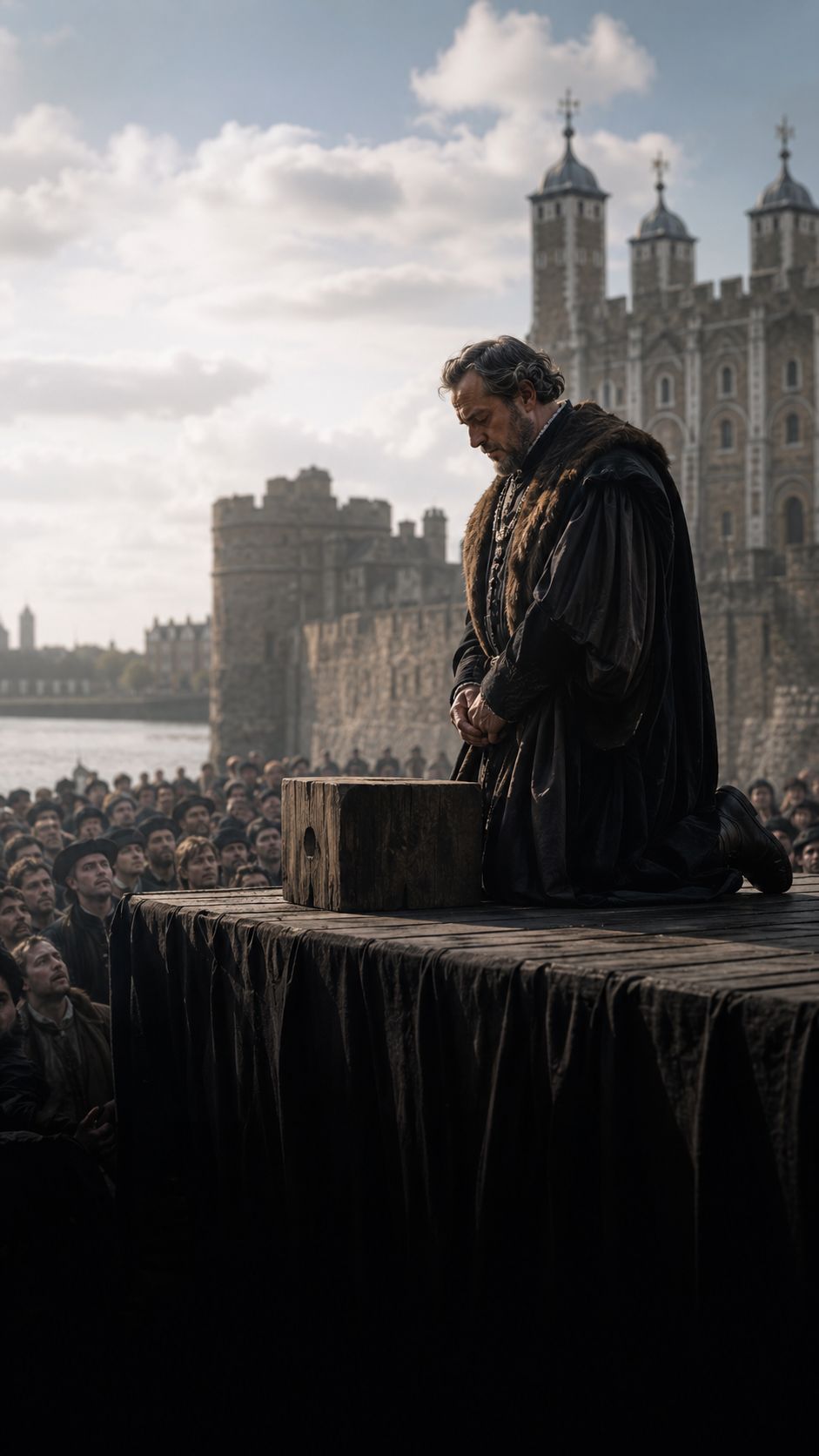
Andrew Harclay was a Cumbrian knight who rose on loyalty and fell on it, and the speed of the fall is what still stops you. In March 1322 he was the man who saved Edward II’s throne. In March 1323 he was taken out of the castle he commanded, publicly stripped of his knighthood, and put to the worst death the law allowed.
He was born around 1270, though the date is only inferred from his first appearance in the records in 1292. He came from a knightly family in Westmorland, served as sheriff of Cumberland, and held Carlisle Castle for the crown. When Robert the Bruce’s army attacked Carlisle in 1315, Harclay led the defence and the city held. He was captured by the Scots soon afterwards and ransomed, with the king helping to raise the money. By 1319 he was sheriff again and Warden of the West Marches, the man charged with keeping the border.
The Horror
The rise came in March 1322. The king’s cousin Thomas, Earl of Lancaster, had risen against Edward, and Harclay met his outnumbered army at Boroughbridge on March 16 and 17. Lancaster was beaten and captured, and executed on March 22. Edward rewarded Harclay on March 25 by making him Earl of Carlisle, a spectacular promotion for a border knight.
Seven months later the war turned. In October 1322 the Scots routed the English army at Old Byland in Yorkshire. Harclay had not reached the field in time to support the Earl of Richmond, who was captured. Whether he received the king’s summons in time is unclear, and there is no evidence that he did. Wikipedia’s account is that Byland convinced him the war could not be won under Edward II. The border was being raided and bled, and the king was not helping.
So on January 3, 1323, at Lochmaben, Harclay made a treaty with Robert the Bruce on his own authority. As Wikipedia summarises it, the treaty recognised Scottish independence, required a payment of 40,000 marks, and let Edward choose a bride from his own family for Bruce’s heir. English Heritage describes a looser deal: two kingdoms, with disputes settled by juries of six Englishmen and six Scots. The sources differ on the terms. They agree that he had no royal permission, and that to the king this was treason, a subject making peace with an enemy Edward refused to call a king.
Edward moved fast. On February 25, 1323, Sir Anthony Lucy arrested Harclay in Carlisle Castle with a small force. English Heritage places the seizure in the great hall. A quarrel over the honour of Papcastle may have sharpened the enmity between the two men.
On March 3 he was brought before a royal justice in Carlisle. The accounts say he was denied a proper hearing and convicted as a traitor. Before sentence came the ritual of degradation. By the account most often repeated, his spurs were cut from his heels and his sword was broken over his head, and he was told he was no longer a knight. Only the two secondary sources consulted describe this detail, and neither cites a chronicle, so treat it as reported, not proven.
He was hanged, drawn and quartered the same day, on Harraby Hill just south of Carlisle. The sentence for treason in that age was to be hanged, cut down alive, disembowelled and beheaded, and the body divided in four. The sources state the method but not the individual steps, so the order of events is the standard sentence, not an eyewitness account. At the foot of the gallows, according to English Heritage, he declared that his intentions in making peace had been good. The Lanercost Chronicle, as quoted by Executed Today, agrees that he deserved death under the law but that his good intention might save him before God.
His body was then scattered. His head went to Edward at Knaresborough and then to London Bridge, where it stayed for about five years. The quarters were displayed in four towns, and here the sources disagree: Wikipedia lists Carlisle, Newcastle, Bristol and Dover, while Great Castles lists York, Carlisle, Newcastle and Shrewsbury. Carlisle and Newcastle are common to both. The other two cities are not settled.
Less than three months after the execution, Edward agreed a thirteen-year truce with Scotland. It was the peace Harclay had been killed for making, and it did not save Edward, who was deposed in 1327. In 1328 Harclay’s sister petitioned for the remains to be given Christian burial, and the request was granted. Some retellings name her Sarah, but none of the pages consulted does, so the name is unverified. His nephew Henry later petitioned to have the conviction annulled under Edward III, and the petition was ignored.
The Legend
Two things in the popular telling cannot be pinned down. One is the rumour that Harclay planned to marry a daughter of Bruce, or to change sides. Wikipedia describes the marriage rumour as unsupported by evidence, and historians still debate whether he was a defector or a desperate man trying to salvage a bad situation. The other is the claim that Edward killed him out of a grudge over Byland. The same article says there is no firm evidence of it. Historians are generally sympathetic to Harclay, yet the episode is still commonly called “Harclay’s treason”.
The Modern Relic
Carlisle Castle, the red sandstone fortress Harclay held, still stands and is open to visitors under English Heritage, with its keep, medieval gatehouse and Warden’s apartments. Its visitor page does not mention Harclay, but its history pages tell his story. The gallows site on Harraby Hill is not marked, and the coordinates given for this story are those of the castle, not of the gallows. The one thing that remains of his death is the record: a head that looked down from London Bridge for five years, a sister who asked for the pieces, and a truce that arrived in the year he did not live to see.