Henry Vane was baptised in 1613, the eldest son of a royal official, and by his early twenties he had crossed the Atlantic and been handed the government of a colony. At 49 he walked onto a scaffold in London with a speech prepared. He never got to deliver it in a way the crowd could hear.
The Horror
Vane came to the Massachusetts Bay Colony as a young, well-connected Puritan. He was governor from May 1636 to May 1637, which makes him a colonial governor before his twenty-fourth birthday. His year was stormy. He defended Anne Hutchinson’s right to hold Bible sessions at home, against the harder ministers, and the dispute cost him the next election. He went back to England, and Hutchinson was later banished from the colony.
At home he became one of the ablest statesmen on the Parliamentary side. He served as Treasurer of the Navy, sat on the Committee of Safety in 1642, and was prominent on the Committee of Both Kingdoms. What makes his end so bitter is that he was not a regicide. He withdrew from Parliament after Pride’s Purge and took no part in the king’s trial in January 1649. He later said that he opposed it out of “tenderness of blood”, and he refused an oath approving it. He also fell out with Cromwell, who dissolved the Rump Parliament in April 1653, and was imprisoned at Carisbrooke Castle in 1656.
None of that saved him after the Restoration. Charles II returned on May 29, 1660, and Vane was named as an exception to the Indemnity and Oblivion Act. He was arrested on July 1, 1660. He was arraigned for high treason on June 2, 1662, and tried before the Court of King’s Bench under Lord Chief Justice Foster, with the Attorney General prosecuting. He was denied counsel, and the jury, which Wikipedia describes as royalist, took about thirty minutes. The verdict came on June 6 and the sentence on June 11. It was hanging, drawing and quartering, commuted by the king to beheading.
The king’s attitude is on record, with a caveat. The Dictionary of National Biography quotes a letter from Charles to the Earl of Clarendon saying that if Vane had given new occasion to be hanged, he was “certainly too dangerous a man to let live”. That is the nearest source. The longer wording that circulates online, ending “if we can honestly put him out of the way”, appears in none of the sources, and it is not repeated here.
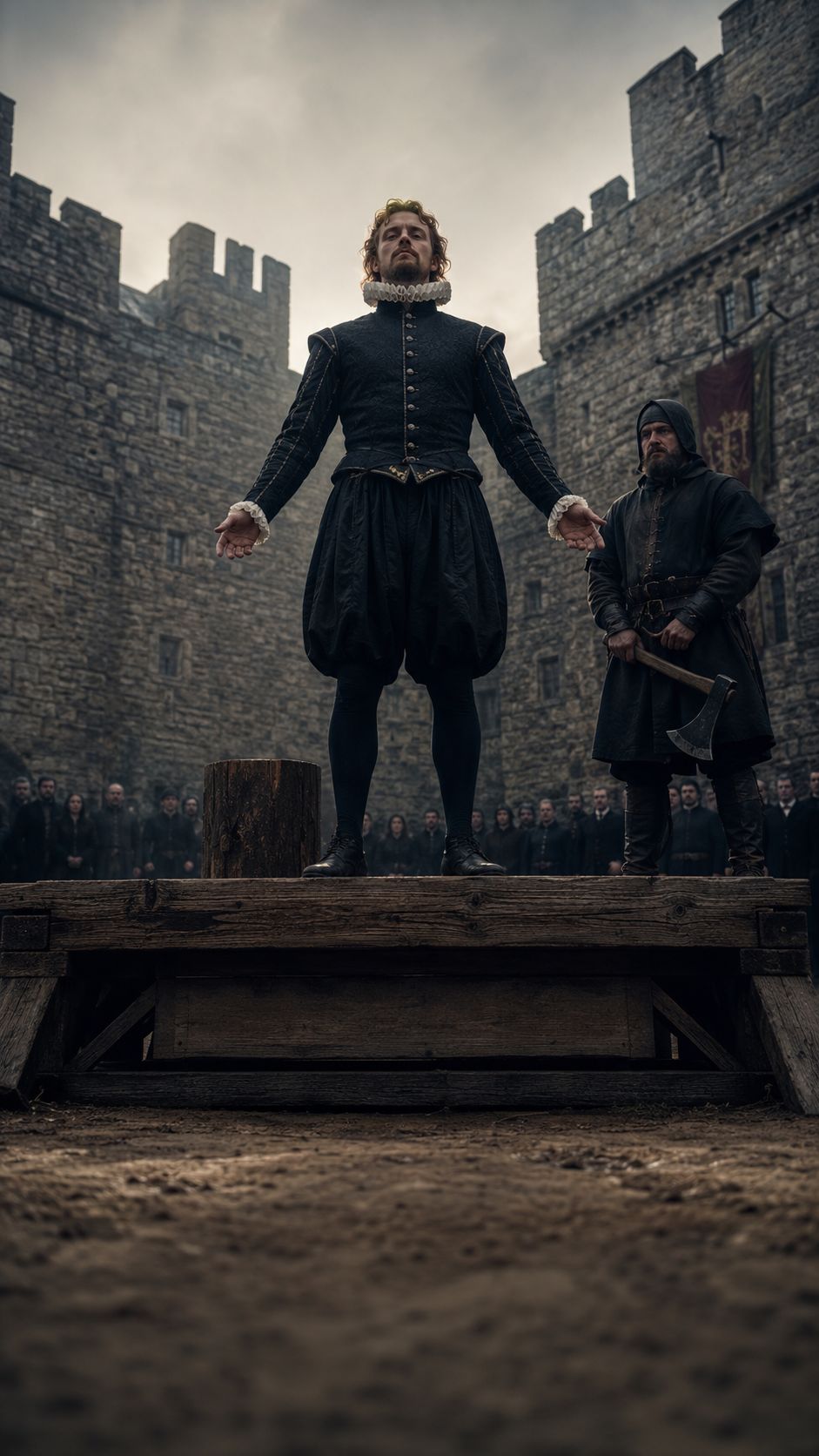
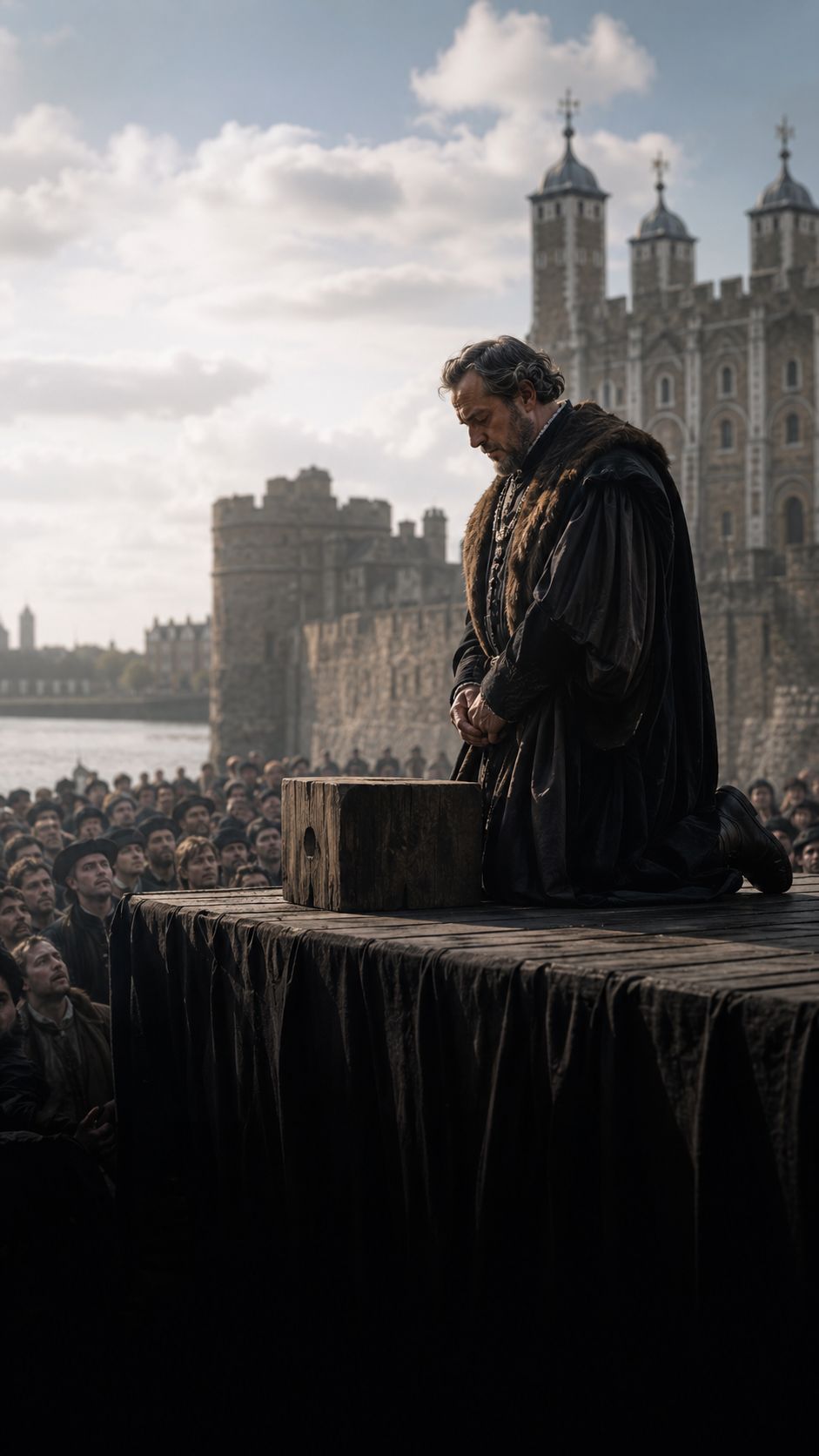
On June 14, 1662, Vane was taken to Tower Hill. Samuel Pepys was among the crowd. By the Dictionary of National Biography, Vane seemed “rather a looker-on than the person concerned” and was composed throughout. Pepys’s remarks, as quoted by Wikipedia and the DNB, are that he showed “more of heat than cowardize, but yet with all humility and gravity”, and that he was “the most resolved man that ever died in that manner”. Asked why he did not pray for the king, he answered “I pray God bless him!”
He began to speak, and the guard sounded trumpets and drums. The DNB says his speech was interrupted three times and that the crowd could not hear it. The sources do not agree on the detail. Wikipedia, relying on Pepys, mentions only trumpets placed under the scaffold. Two popular pages add that the sheriff tried to tear the written notes from his hands, and Wikipedia’s account of Pepys says Vane would not let go. The DNB does not mention the notes at all. One magazine piece places the noise at the moment the axeman held up the head; only that one weak source supports that. A popular retelling says the papers were snatched as he tried to give them to friends; that sequence is unconfirmed. What the sources do support is that friends already held copies, and the text was published after his death as “The Substance of what Sir Henry Vane intended to have spoken upon the Scaffold”.
The Modern Relic
The scaffold stood on higher ground north-west of the Tower of London, on ground that is now Trinity Square Gardens. The Tower Hill Memorial there marks the scaffold site, and signs name those put to death. Around 120 executions are chronicled on Tower Hill. Vane’s body was returned to his family, and he was buried at Shipbourne in Kent on June 15, 1662, the day after his death.
His afterlife is mostly in America. A statue by Frederick MacMonnies stands in the Boston Public Library, and Rhode Island’s 1643 charter, which he helped draft, guaranteed freedom of religion. John Milton had addressed a sonnet to him in 1652. A blue plaque was put on the site of his demolished Hampstead house, Vane House, in 1897. No reliable list of places or institutions in Massachusetts named after him has been found, so no claim is made about that.