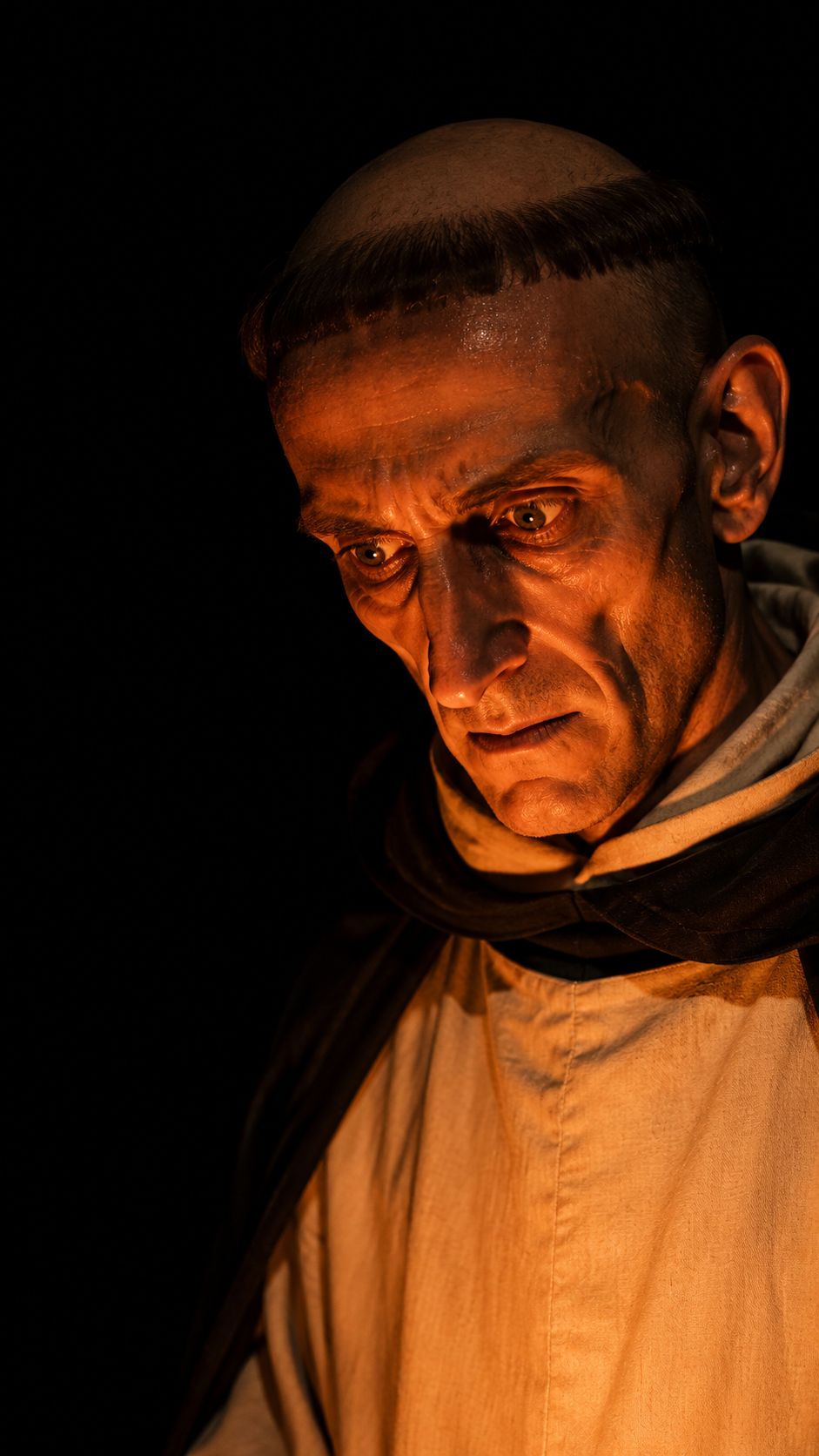
In the frozen floor of Hell, Dante finds a man gnawing at the back of another man’s skull. He asks why. The gnawer lifts his mouth from “the horrible meal” and tells of a tower with a locked door, and of children asking for bread. Readers have been unsettled by it for seven centuries. What many do not realise is that the speaker was a real man, the tower was a real building, and the starvation, in outline, is a real event in the history of Pisa.
The Horror
Ugolino della Gherardesca belonged to one of the great families of Pisa, then a maritime republic and a rival to Genoa. By the 1280s he was its leading figure, serving as Capitano del Popolo, and the sources describe a career of switching sides in the city’s long fight between Guelphs and Ghibellines. His enemies called it treachery. One historian, writing of the disastrous naval defeat at Meloria in 1284, reads his conduct as betrayal, while another puts it down to his Ghibelline alliances. The motive is argued over to this day.
In 1288 the city turned on him. On July 1, after a council meeting on peace with Genoa, armed Ghibellines attacked Ugolino and his followers. He held out in the town hall until it was set on fire, and then surrendered. An illegitimate son of his was killed in the fighting. The man behind the rising was the archbishop of Pisa, Ruggieri degli Ubaldini, who had turned the citizens against him.
Ugolino was taken to a tower belonging to the Gualandi family. With him went two sons, Gaddo and Uguccione, and two grandsons, Nino and Anselmuccio. The sources differ on when the doors closed: the Scuola Normale’s account says July or August 1288. They agree that the end came in March 1289, when, on the archbishop’s orders, the keys were thrown into the Arno and the five were left to starve. Executed Today says only that the day in March 1289 is uncertain. All five died.
Almost everything known of the manner of it comes from Dante, who was not a witness and wrote after the event. The Wikipedia article itself warns that the historical details are obscure and that the episode owes its fame mainly to him. In the canto Ugolino recounts the deaths of his sons and grandsons, and it ends on a line that has divided readers: “Then fasting had more power than grief.” Did hunger finally force him to eat his dead? Or did starvation kill a man whom sorrow had failed to kill? Dante leaves it open. The first reading is the popular one, and it earned Ugolino the title of the Cannibal Count.
The Cannibal Question
In 2002 the palaeoanthropologist Francesco Mallegni examined bones from the Gherardesca burials. According to Wikipedia’s summary, DNA testing showed a father, his sons and his grandsons, and Mallegni put his confidence in the identification at about 98 per cent. Rib bones showed magnesium but no zinc, which suggests that no meat was eaten in the months before death. The man identified as Ugolino had few teeth and was probably in his seventies, so he was an unlikely candidate to have outlived four younger men and eaten them. The same page notes that a damaged skull raises the question whether he died of starvation alone.
Treat this carefully. It rests on a secondary summary of a single study, and the identification of the bones is itself contested. In 2008 Paola Benigni claimed that the documents tying the burials to Ugolino and his descendants were forgeries from the Fascist era. If she is right, the forensic case against cannibalism falls with them. What remains is that Dante did not say it plainly, and that the evidence for the legend was never more than a line of verse. The bodies lay buried in the cloister of San Francesco until 1902, when they were exhumed and moved to the family chapel.
The Legend of the Tower’s Name
The tower is often called the Torre della Muda, from the Italian word for moulting. A fourteenth-century commentator, Francesco da Buti, said that eagles were once kept there while they moulted, and Dante scholars have cautiously accepted it. The Scuola Normale says no document confirms this and that “Tower of the Gualandi” is the more accurate name. It is a tradition, nothing more, that the birds ever lived there.
The Modern Relic
The tower stood where Piazza dei Cavalieri is now, one of the finest squares in Pisa and a short walk from the Leaning Tower. It did not survive in its own right. By 1527 it was nearly a ruin, and during the rebuilding of the square for the Medici in the 1560s labourers lived in it and quarried it for stone. Between 1605 and 1608 Grand Duke Ferdinando I ordered it erased and absorbed into the new Palazzo dell’Orologio, calling it “questa memoria infame”, an infamous memory he wanted out of sight.
Peleo Bacci later identified the tower as the right-hand section of that palace, and a restoration funded by the Scuola Normale between 1975 and 1980 recovered the surviving medieval fabric. So the Tower of Hunger is still there, inside the clock palace, and the Medici failed to hide it. None of the sources consulted records a plaque on the building, so do not count on finding one.