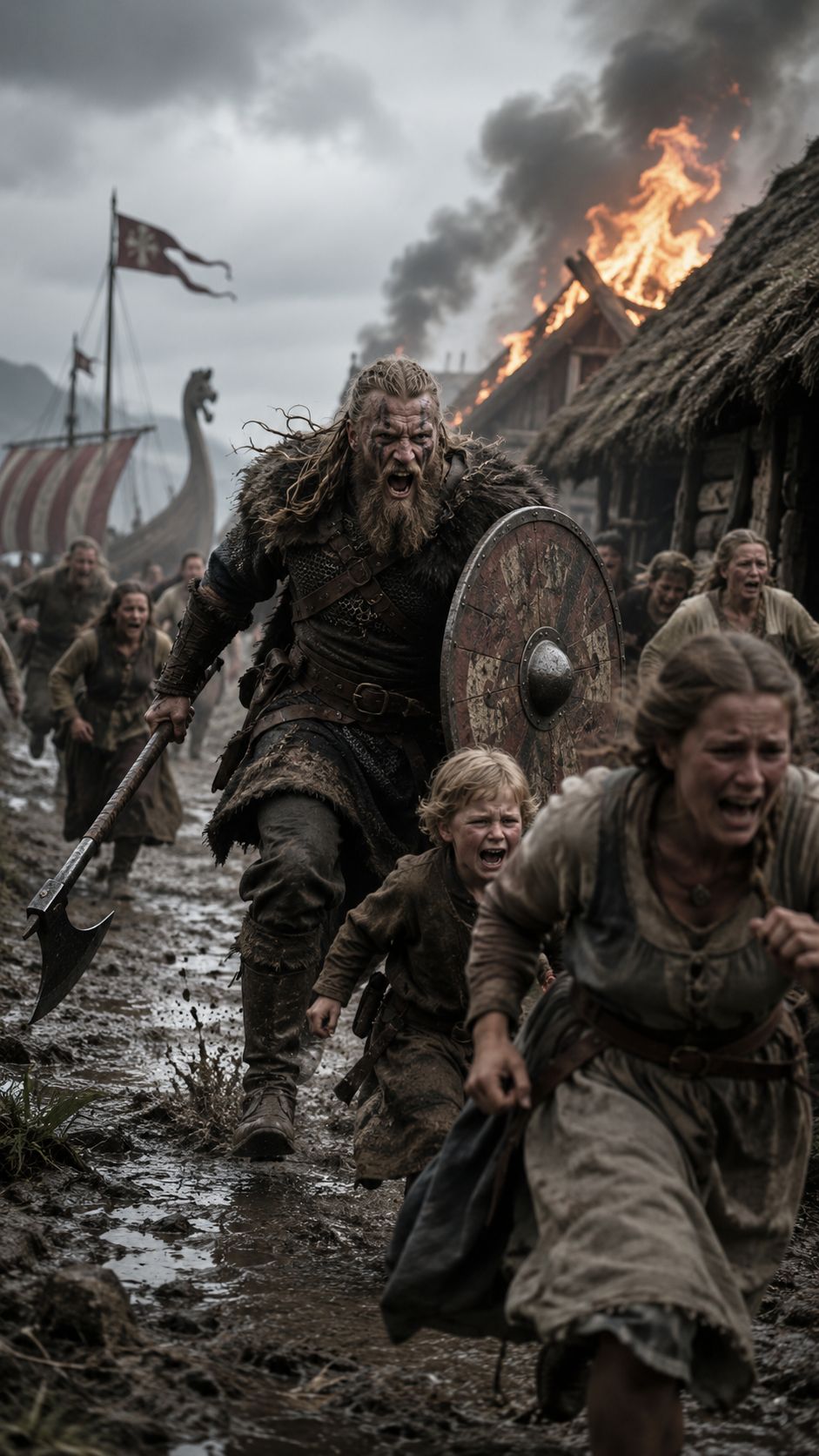
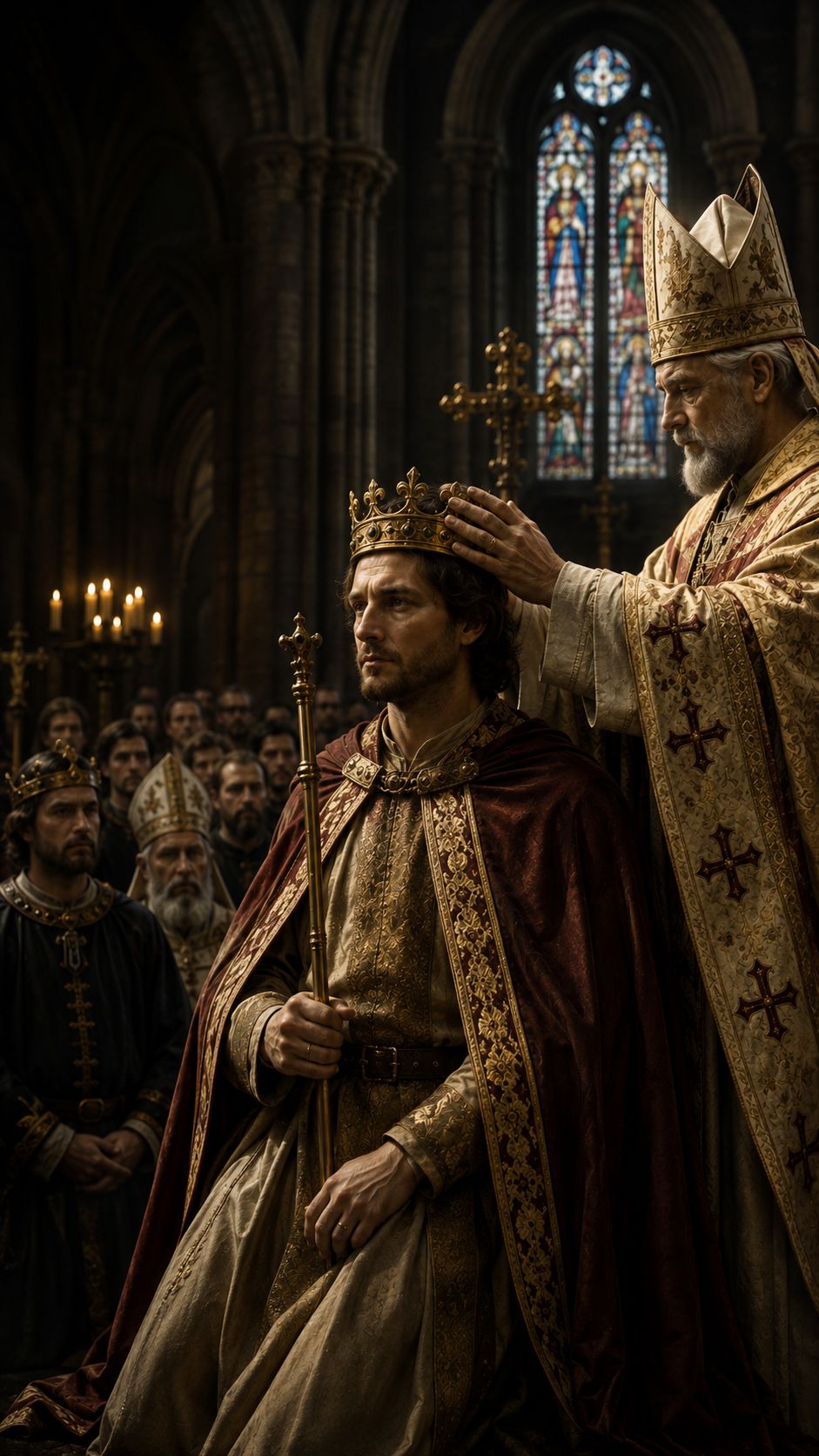
A king of England was killed by his own household in the spring of 978, on land belonging to his stepmother. No contemporary writer says who did it, and nobody is known to have been punished. The dead man was then declared a saint, and the argument about where his body lies continued into the twentieth century.
The Horror
Edward was the son of King Edgar and succeeded him. His younger half-brother Æthelred was the son of Edgar’s widow, Queen Ælfthryth. On the evening of March 18, 978, Edward was killed at the Gap of Corfe in Dorset, on his stepmother’s estate. The date is accepted by most historians, although David Dumville argues for 979. He was buried quickly at Wareham, without royal honours. Æthelred became king.
The sources are thin and late. The Anglo-Saxon Chronicle in its earliest version says only that he was killed in 978. Later versions give the date and place and call him a martyr. The only detailed account written before the Norman Conquest is by Byrhtferth of Ramsey in his Life of St Oswald, around the year 1000. The scholar Michael Lapidge suggests parts of it may be fabricated, as it echoes the Gospel story of Christ’s betrayal, while other historians are more willing to trust it. A poem of about the same date says Edward died “through envy, at the hands of his own kin”.
Who ordered it is unconfirmed. Writers after the Conquest, among them John of Worcester, William of Malmesbury and Henry of Huntingdon, blame Ælfthryth. Modern historians disagree on her guilt, and none of the pre-Conquest sources names her as the killer.
The Legend
The popular scene of a drink offered to Edward as he arrived, and a servant stabbing him while he drank, comes from William of Malmesbury, writing long after the Conquest. It is a later narrative and not a record. The same is true of the story, in the Passio et Miracula of about 1100, that Ælfthryth hid the body in a marsh and that a column of fire revealed it in February 979. That text is hostile to her and Wikipedia treats much of it as unreliable.
What can be said is that Byrhtferth reports the body being dug up about a year after the death by Ealdorman Ælfhere, found undecayed, and taken to Shaftesbury Abbey. Wikipedia’s article on Edward puts this in 979, and its article on the abbey gives 981 for the move from Wareham. The date is not settled.
The Modern Relic
Edward’s cult grew. Æthelred promoted it, and in 1001 he gave land at Bradford on Avon to God and to “his saint, my brother Edward” to shelter nuns and relics. A law code of 1008 orders his feast on March 18 to be kept across England, though the clause may have been added by Cnut around 1018. The feast still appears in the 1662 Book of Common Prayer. Historians such as Rollason argue that Æthelred and Cnut backed the cult partly to raise their own standing.
Corfe Castle is owned by the National Trust and open to visitors. Wikipedia says that an Anglo-Saxon hall may have stood on the site and may be where Edward was killed. The village below has a church of St Edward, King and Martyr, one of the dedications to him that Wikipedia lists. Shaftesbury Abbey was destroyed at the Dissolution in 1539, and its ruins, a museum and a medieval-style garden can be visited from April to October.
The bones are a separate dispute. The amateur historian John Wilson-Claridge dug at Shaftesbury Abbey in 1930 to 1932 and claimed to have found Edward’s remains in the north transept, but published no report. In 1963 the pathologist Thomas Stowell concluded they belonged to a young man of 17 to 19 with injuries consistent with Byrhtferth’s account, and one bone was carbon-dated to the right period. Don Brothwell is reported to have concluded they were an older man’s and that the damage was post-mortem, but never published his findings. Wilson-Claridge gave the bones to the Russian Orthodox Church Abroad in 1980, and a High Court hearing in 1988 allowed them to go to the church of St Edward the Martyr at Brookwood, set up for that purpose. Historians remain highly sceptical that they are his.