Latest stories

The Earl of Morton and the Maiden

The last great regent of James VI's boyhood was beheaded in 1581 by Edinburgh's Maiden. Legend says he brought the blade from Halifax. The records say the town council ordered it in 1564.

Evidence: thin · Lightly sourced: one or two sources, mostly Wikipedia.

James Douglas, 4th Earl of Morton, ran Scotland for much of the 1570s as regent for the boy king James VI. In 1581 he was condemned for his part in the murder of the king’s father and beheaded on the Maiden, an early Scottish guillotine. Popular tradition adds that he had introduced the machine himself. That detail is a legend.

The Horror

The charge against Morton went back to the death of Henry Stuart, Lord Darnley, the king’s father, in 1567. On December 31, 1580, James Stuart, Earl of Arran, accused Morton at a council meeting at Holyrood of complicity in the murder. Morton was detained and taken to Dumbarton Castle.

He was condemned by an assize at the Tolbooth on June 1, 1581, for taking part in the murder. Morton confessed that the Earl of Bothwell had told him of the plot, but he denied taking any active part. He was held at the house of Robert Gourlay on the Royal Mile and attended by James Lawson of St Giles. He slept well on the night after his condemnation. He made a confession before his death to John Durie and Walter Balcanquhall, the content of which is not recorded, and no last words are preserved.

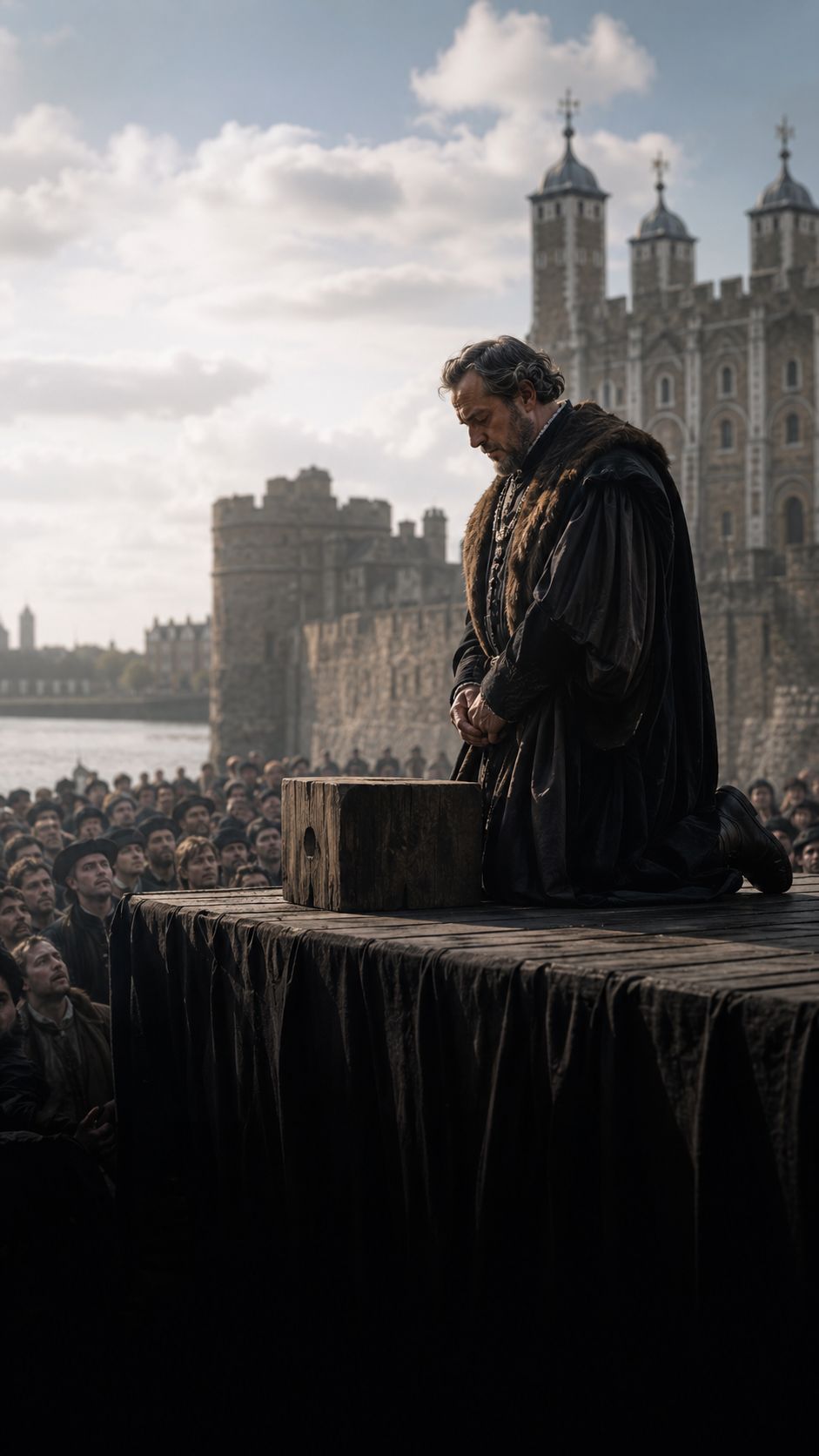
On June 2, 1581, he was beheaded in Edinburgh by the Maiden. His body was buried in an unmarked grave at Greyfriars Kirkyard. His head was displayed on a spike on the Tolbooth for about eighteen months, until it was ordered reunited with his body in December 1582.

The Legend

The best-known story about Morton is that he saw the Halifax Gibbet in Yorkshire and had the Maiden built after its pattern, so that he died by the device he had brought to Scotland. It is a tidy irony, and it is not supported. The Maiden was ordered in 1564, during the reign of Mary, Queen of Scots, seventeen years before Morton’s death, and the legend traces back to David Hume of Godscroft’s History of the House of Angus, published in 1644. No other source backs the claim that Morton introduced the device. The record says only that the Maiden was ordered by the town council and made of oak with a lead weight and an iron blade, and the Halifax model is a later explanation.

The Modern Relic

The Maiden was used until 1716, when it beheaded John Hamilton for murder on June 30. More than 150 people are said to have died on it. It is on display at what is now the National Museum of Scotland in Edinburgh.

Morton’s own grave is unmarked. A small sandstone post marked J.E.M. is sometimes said to mark it, but it is more probably a Victorian marker for a lairage, and had a marker been set up for him the initials would more likely have been J.D.
Still there todayThe Maiden itself is held at what is now the National Museum of Scotland in Edinburgh. Morton is buried in an unmarked grave at Greyfriars Kirkyard, and the sandstone post marked J.E.M. said to be his marker is probably a Victorian marker for something else. See it on the Dark Atlas →
Sources
  • Wikipedia, 'James Douglas, 4th Earl of Morton' — Arran's accusation of December 31, 1580, Morton's detention at Dumbarton, his condemnation by an assize at the Tolbooth on June 1, 1581, his admission that Bothwell had told him of the plot against Darnley while denying he took part, his execution by the Maiden on June 2, 1581, the attendance of James Lawson, the burial at Greyfriars, the head on the Tolbooth for about eighteen months and its reunion with the body ordered in December 1582, the doubtful J.E.M. marker, and the Halifax legend traced to David Hume of Godscroft's History of the House of Angus (1644). It records no last words, and the content of his confession is not recorded
  • Wikipedia, 'Maiden (guillotine)' — the Maiden ordered in 1564 in Mary, Queen of Scots's reign, built of oak with a lead weight and iron blade, used until 1716 with John Hamilton the last on June 30, 1716, more than 150 people executed, the 1644 history's claim that Morton introduced it, which no other source supports, and its display at what is now the National Museum of Scotland

Nearby on the Dark Atlas

  • The Husband Blown Up And Strangled In A Nightgown

    Mary, Queen of Scots' hated husband was found dead in a garden after his lodging exploded — but he hadn't died in the blast.

  • Bluidy Mackenzie and the Covenanters' Prison

    Edinburgh's most famous haunting is a tomb beside a prison yard. In 1679 Covenanter prisoners were penned there, and 200 drowned on a ship off Orkney. The ghost story is the lesser horror.

  • The Edinburgh Mob That Hanged Captain Porteous

    In September 1736 a crowd of over 4,000 broke into the Old Tolbooth, took a reprieved officer to the Grassmarket and hanged him. No one was ever punished, and Edinburgh still spits on the spot.

  • The Bloody Scottish Law Behind Red-Handed

    A phrase now used for stolen biscuits once meant a killer caught with blood still on his hands.

All stories near Scotland →

← Back to the archive